This is a complete sample action research, from choosing the topic to the final report, written the way the Department of Education (DepEd) asks. The report follows the template for a completed action research in Annex 6 of the Research Management Guidelines (DO 16, s. 2017). The planning steps follow DepEd’s Action Research Toolkit, and the ethics follow DepEd’s rules on research with learners. Every number in it was computed from the data in Appendix A, so you can redo the analysis in Excel.
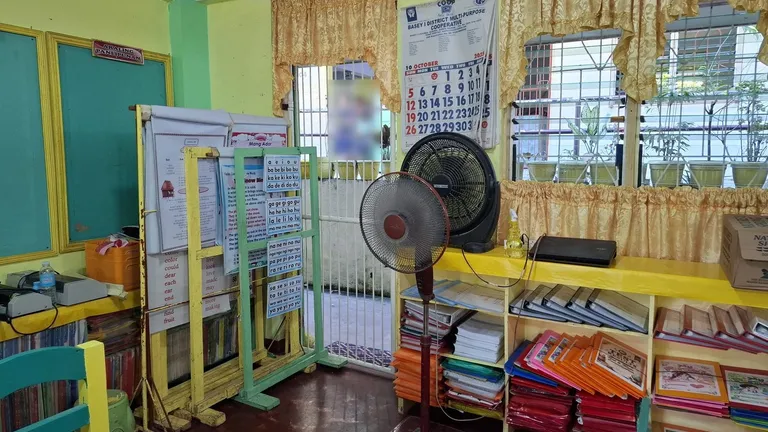
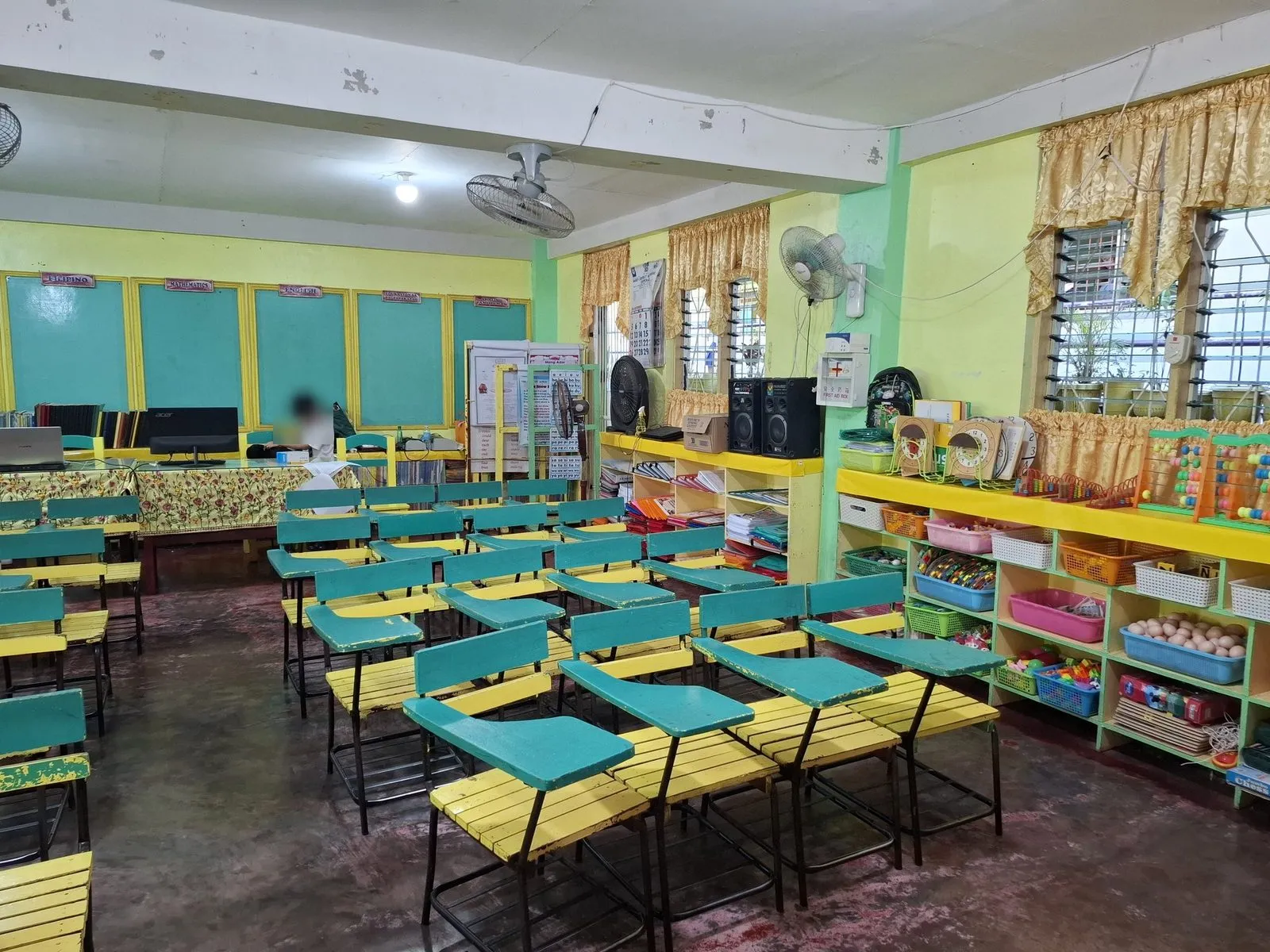
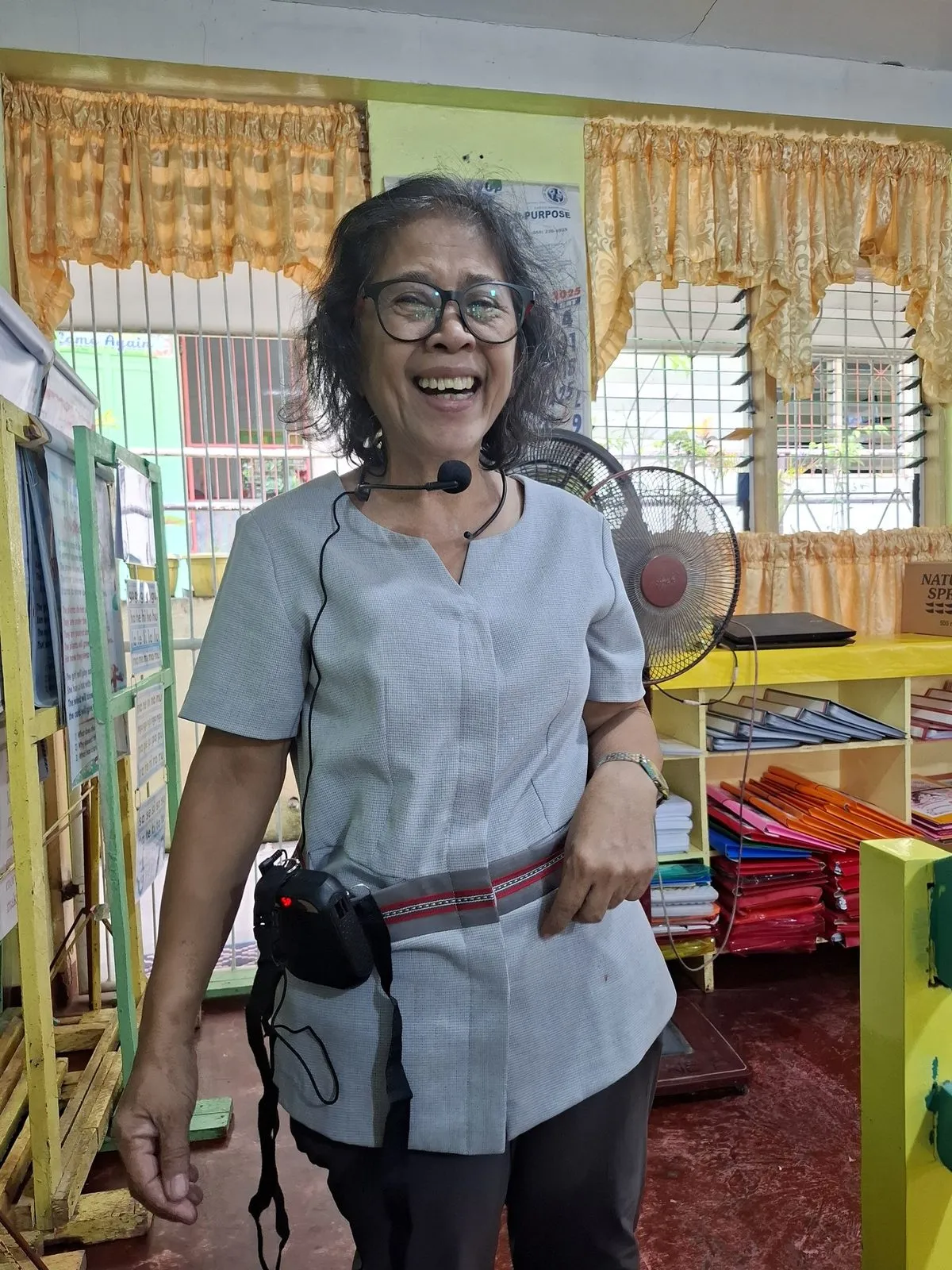
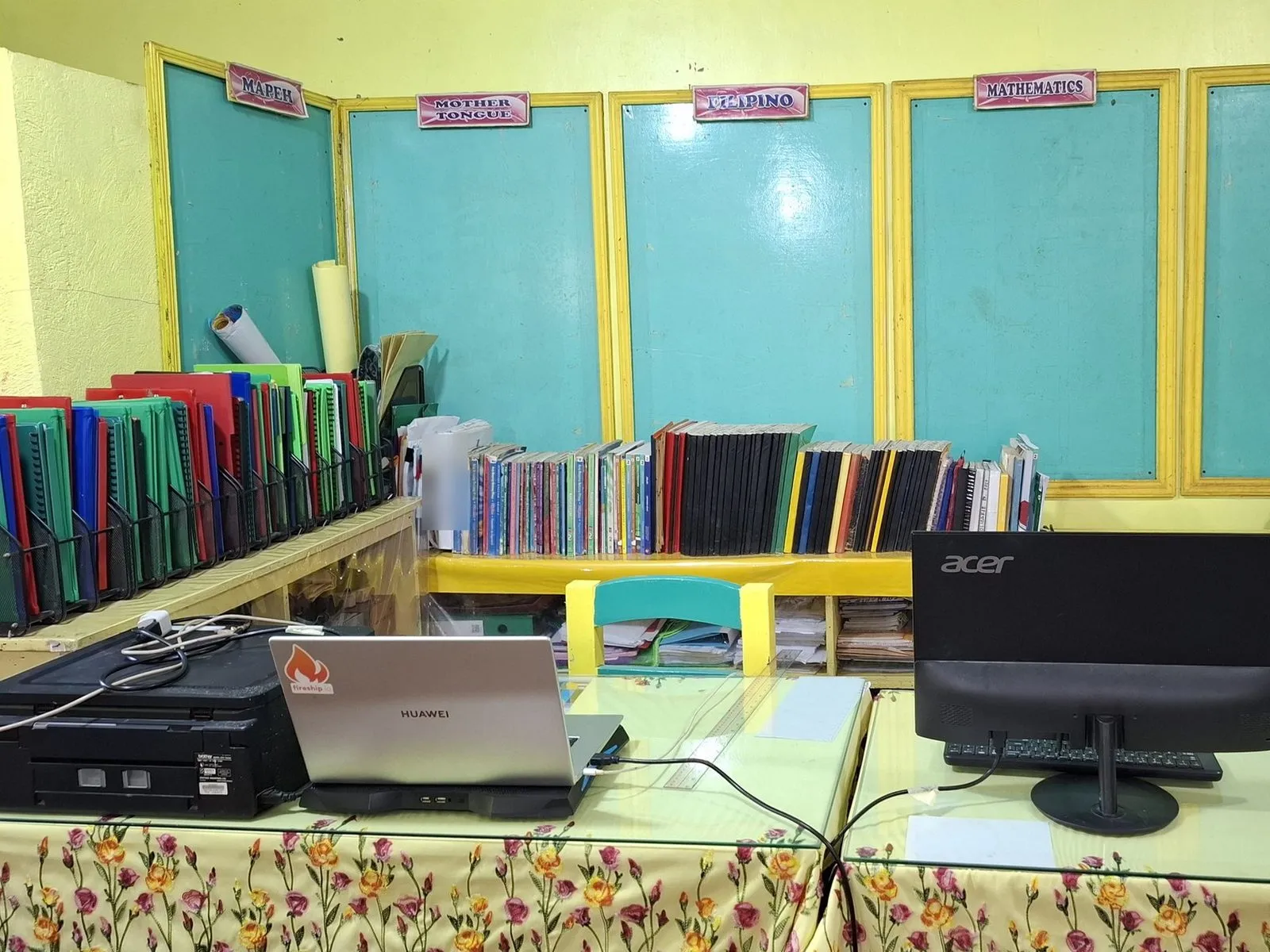
This is an invented study. Basey I Central Elementary School is a real DepEd public school in the Basey I District of the Schools Division of Samar, Region VIII. It is used here only as a realistic setting. The school did not conduct this study. The teachers, learners, parents, data and results are fictional, and no real person is named. The photographs are real: they show the school’s classrooms and a Grade 2 teacher who is not part of the study. In your own action research, use your own school’s data.
It is written for teachers writing their first action research, for school heads and research committees who review them, and for anyone who wants to see how the separate steps fit together.
Key points
- The study: ten minutes of daily repeated reading for eight weeks, with 32 Grade 3 learners reading below grade level in Filipino.
- The design: a one-group pretest-posttest design with interviews, the simplest design that tests an intervention.
- The result: mean fluency rose from 41.3 to 55.8 words correct per minute (WCPM), t(31) = 6.12, p < 0.001, d = 1.08. The report states what a one-group design cannot rule out.
- Every section of DepEd’s template is here: title page, abstract, acknowledgment, context and rationale, intervention, research questions, methods, results and reflection, action plan, references and financial report.
- The ethics are built in: the school principal’s permission, parents’ consent, learners’ assent, codes instead of names, and a declaration of AI use under DO 003, s. 2026.
- Use it as a model, not a template to copy. Your problem, data and reflection must be your own.
The setting: Basey I Central Elementary School, Basey, Samar
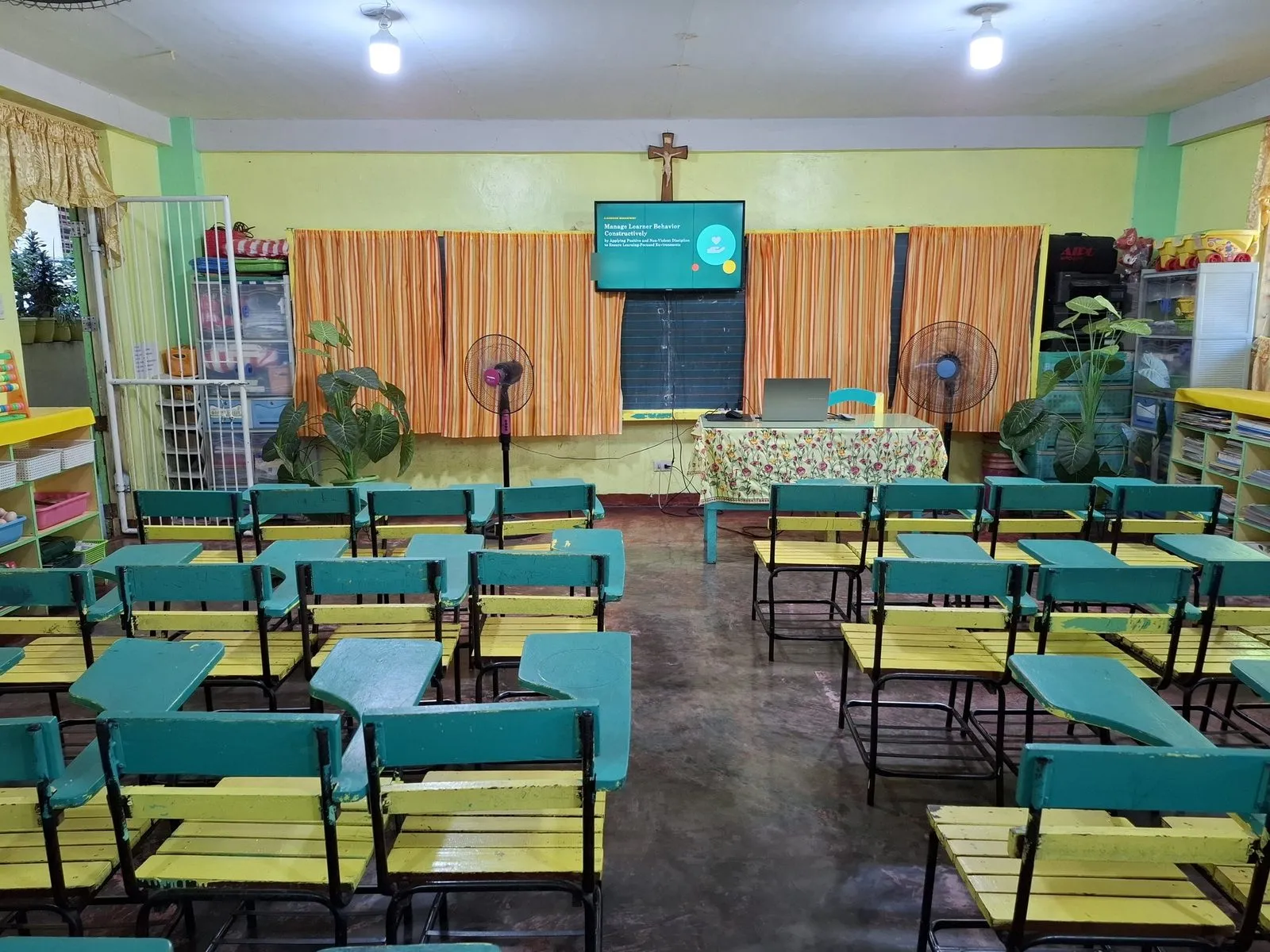
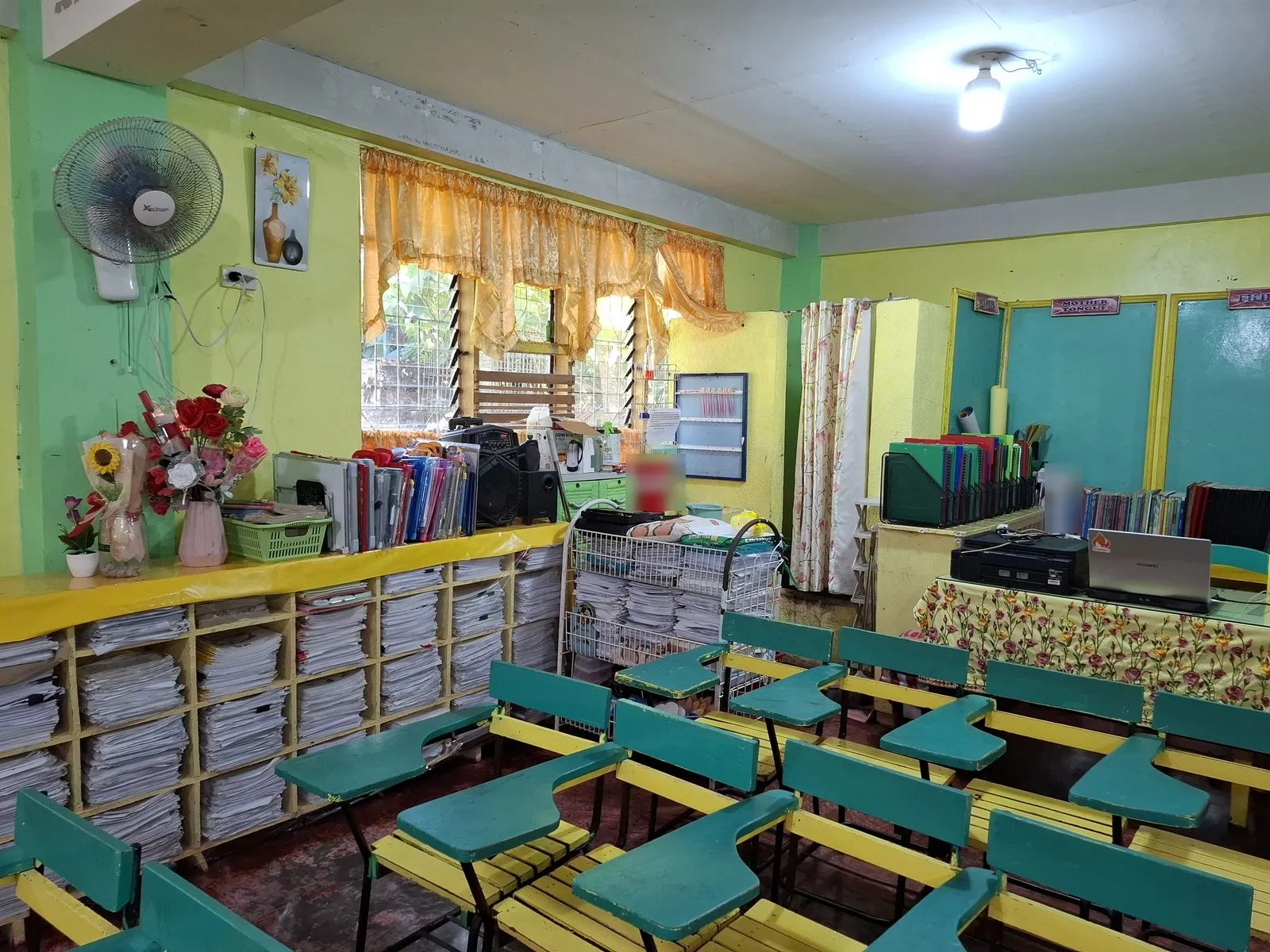
Basey I Central Elementary School (DepEd School ID 123307) is a public elementary school in the town of Basey, Samar, in the Basey I District of the Schools Division of Samar, Region VIII (Eastern Visayas). DepEd’s school data for SY 2023-24 list 701 learners from Kindergarten to Grade 6 and 28 teachers. Its learners’ home language is Waray, the language in which the school gives the CRLA’s mother tongue assessment. These facts and the photographs below are real; the study that follows is not.
Part 1. How the study was planned
Step 1. Assess the situation and choose the topic
The research team, two Grade 3 advisers and the school’s reading coordinator (a master teacher), listed three problems from their classes and rated each with the toolkit’s rubric for evaluating topics (section 2.2), from 5 (very high) to 1 (very low):
| Problem | Strategic importance | Urgency | Magnitude | Feasibility | Total |
|---|---|---|---|---|---|
| 32 of 61 learners in our two sections read below grade level in Filipino (beginning-of-year CRLA) | 5 | 5 | 4 | 4 | 18 |
| Many learners do not complete homework | 3 | 3 | 4 | 4 | 14 |
| Some learners arrive late most mornings | 2 | 2 | 3 | 3 | 10 |
Reading came first. It falls under the Teaching and Learning theme of the Basic Education Research Agenda (DO 39, s. 2016). Action Research Titles by Subject, With Data and Scores explains the rubric.
Step 2. Ask the question
The team wrote three research questions and a null hypothesis for the second (how to write them):
- What is the oral reading fluency of the participants before and after eight weeks of daily repeated reading?
- Is there a significant difference between their pretest and posttest fluency?
- How do the learners and their parents describe their experience of the intervention?
H₀: There is no significant difference between the participants’ pretest and posttest words correct per minute.
Step 3. Plan the intervention and the methods
- Design: one group, tested before and after, plus interviews. The toolkit names experimental and qualitative designs as the two that test an intervention, and classes a one-group pretest-posttest as pre-experimental, the weakest kind, so the team planned to report its limits (why).
- Participants: all learners in the two sections below grade level in Filipino on the beginning-of-year Comprehensive Rapid Literacy Assessment (CRLA): a purposive sample, as the toolkit expects in action research (sampling).
- Instrument: one-minute timed readings of grade-level Filipino passages, scored as words correct per minute.
- Analysis: a paired t-test and effect size in Excel (how); thematic analysis of the interviews (how).
Step 4. Ethics and permissions
- The school principal approved the study in writing before any data were collected.
- Parents gave written informed consent at an orientation, in Waray and Filipino; each learner was asked, in simple words, whether they wanted to take part. All 32 parents and learners agreed.
- Learners were coded L01 to L32, and interviewees I-L1 to I-L8 (learners) and I-P1 to I-P8 (parents), with no link between the two sets of codes in any shared file. The key to the codes was kept by the team leader only.
- No photographs of learners’ faces were taken, and no names or Learner Reference Numbers appear in the data.
- Every learner in the two sections did the same daily routine, with harder passages for those already at grade level, so no learner was left out of the benefit. Only the participants’ scores were collected.
- The team followed the Child Protection Policy (DO 40, s. 2012), which the Research Management Guidelines name as the reference for research with learners.
DepEd Action Research Ethics: Consent, Assent and Privacy has sample consent and assent texts.
Step 5. Work plan
| Activity | When |
|---|---|
| Proposal, principal’s approval, consent orientation | December 2025 |
| Pretest (three passages per learner) | January 5 to 9, 2026 |
| Intervention, 40 school days planned | January 12 to March 6, 2026 |
| Posttest and interviews | March 9 to 20, 2026 |
| Analysis | March 23 to April 10, 2026 |
| Report writing and review | April to May 2026 |
| Presentation at the school’s first LAC session | June 2026 |
School Year 2025–2026 ran from June 16, 2025 to March 31, 2026 under DO 012, s. 2025, so the study fit inside the second half of the school year.
Step 6. Cost and funding
The materials cost PhP 4,430, paid by the team (see the financial report). A study like this could also apply for a Basic Education Research Fund (BERF) grant of up to PhP 30,000, but the timing would have to be planned well ahead: in NCR’s 2026 call, for example, proposals were due in February and March and funded action research ran from May to October (BERF guide).
Part 2. The completed report
The parts below follow DO 16’s Annex 6, B. Completed Action Research. The proposal, prepared in December, followed Annex 2’s action research template (proposal format); the report reuses its context, questions and methods in the past tense (report format).
I. Title page
DAILY REPEATED READING AND THE ORAL READINGFLUENCY OF GRADE 3 LEARNERSREADING BELOW GRADE LEVEL
An Action Research
Teacher-Researcher 1, Teacher III, Grade 3 AdviserTeacher-Researcher 2, Teacher I, Grade 3 AdviserTeacher-Researcher 3, Master Teacher I, School Reading Coordinator
Basey I Central Elementary SchoolBasey I District, Schools Division of SamarDepartment of Education, Region VIII (Eastern Visayas)
June 2026
The title has 16 words, the toolkit’s maximum, in capital letters and an inverted pyramid. In a real report, the researchers’ names go where “Teacher-Researcher” appears.
II. Abstract
Learners who cannot read fluently fall behind in every subject. This action research tested whether ten minutes of daily repeated reading would improve the oral reading fluency of Grade 3 learners reading below grade level at Basey I Central Elementary School, Basey, Samar. Thirty-two learners from two sections, identified through the beginning-of-year Comprehensive Rapid Literacy Assessment, took part for eight weeks in the second half of School Year 2025–2026. The study used a one-group pretest-posttest design with a qualitative component. Fluency was measured as words correct per minute on grade-level Filipino passages before and after the intervention and compared with a paired t-test. Eight learners and their parents were interviewed, and their answers were analyzed thematically. Mean fluency rose from 41.3 to 55.8 words correct per minute, a gain of 14.5, t(31) = 6.12, p < 0.001, d = 1.08. Learners who started lowest gained the most, partly a sign of regression to the mean, which a one-group design cannot rule out. The interviews showed three themes: growing confidence in reading aloud, the value of a predictable daily routine, and little reading practice at home. The results suggest that daily repeated reading is a low-cost way to build fluency, but a study with a comparison group is needed to confirm its effect. The school will extend the routine to all Grade 3 sections in the next school year and send home weekly reading passages so that parents can practice with their children.
Keywords: repeated reading, oral reading fluency, Grade 3, Filipino, action research
The abstract has 242 words, within the toolkit’s 200 to 250. How to Cite DepEd Orders in APA 7 and Write the Abstract explains its parts.
III. Acknowledgment
The researchers thank the school principal of Basey I Central Elementary School for approving and supporting this study; the Public Schools District Supervisor of Basey I District for encouraging action research in the district’s schools; the Grade 3 teachers who shared their classes’ reading time; and above all the parents and learners who took part. Any errors are ours.
IV. Context and Rationale
Reading fluency, the ability to read text accurately and at a natural pace, frees a learner’s attention for understanding (National Institute of Child Health and Human Development, 2000). Learners who read word by word spend their effort on decoding and lose the meaning of what they read, and they fall further behind as texts in every subject grow longer.
At the beginning of School Year 2025–2026, the Comprehensive Rapid Literacy Assessment (CRLA) showed that 32 of the 61 learners in our two Grade 3 sections were reading below grade level in Filipino: 4 at the Low Emerging level, 7 at High Emerging, 9 at Developing and 12 at Transitioning. In class, these learners read aloud slowly and hesitantly, and many avoided reading in front of others. Grade 3 is the last grade covered by the CRLA, and the reading demands of Grade 4 are much greater.
We looked for an intervention that would fit into ten minutes a day, need only printed passages, and work with a whole class. Repeated reading, in which learners read the same short passage several times until they read it smoothly, met all three. It has a long research record (Samuels, 1979), and a meta-analysis found that it improves the fluency of learners who read below grade level (Therrien, 2004). The study addresses the Teaching and Learning theme of the Basic Education Research Agenda (Department of Education [DepEd], 2016).
This action research tested whether daily repeated reading would improve the oral reading fluency of the Grade 3 learners in our sections who read below grade level, and how they and their parents experienced it.
V. Innovation, Intervention, and Strategy
The intervention, which we called Basa Ulit (“read again”), took the first ten minutes of the Filipino period every school day for eight weeks. Each week used one new passage of 100 to 120 words at Grade 3 level, taken from the Grade 3 Filipino learning materials or written by the team and reviewed by the reading coordinator.
Day Activity (10 minutes) Monday The teacher introduces the passage, explains difficult words (in Waray when needed), and reads it aloud as a model; the class reads it together. Tuesday to Thursday Partners take turns reading the passage aloud three times each; the listener follows with a finger and marks hard words. The teacher listens to three or four learners and corrects errors. Friday Each learner reads the passage to the teacher or a partner for one minute, counts the words read correctly, and colors that number on a personal progress chart. Pairs were set by the teacher, a more fluent reader with a less fluent one. Learners already at grade level followed the same routine with harder passages. A daily checklist recorded whether the session took place and who was absent.
VI. Action Research Questions
- What is the oral reading fluency, in words correct per minute, of the Grade 3 learners reading below grade level before and after eight weeks of daily repeated reading?
- Is there a significant difference between their pretest and posttest fluency?
- How do the learners and their parents describe their experience of the intervention?
VII. Action Research Methods
a. Participants and Other Sources of Data and Information
The participants were the 32 learners (18 boys and 14 girls) in our two Grade 3 sections, 16 in each, who read below grade level in Filipino on the beginning-of-year CRLA. They were selected purposively: all learners in the two sections who met this criterion took part. For the interviews, we chose two learners from each CRLA level, eight in all, and interviewed one parent of each.
b. Data Gathering Methods
Oral reading fluency. Each learner read three grade-level Filipino passages of about 110 words, not used during the intervention, for one minute each. The score was the number of words read correctly in one minute: words read minus errors. Mispronunciations, substitutions and omissions counted as errors; self-corrections within three seconds counted as correct; a word the teacher supplied after three seconds counted as an error. The learner’s score was the median of the three readings, as is usual in fluency assessment (Hasbrouck & Tindal, 2006). The pretest was given on January 5 to 9 and the posttest on March 9 to 13, 2026, by the learners’ own advisers.
Scoring agreement. For 8 of the 32 learners (25%) at both the pretest and the posttest, a second team member scored the same readings at the same time. The two scores were within two words of each other in 15 of the 16 readings.
Interviews. We interviewed the eight learners (10 to 15 minutes each) and their parents (20 to 30 minutes each) on March 16 to 20, 2026, with semi-structured guides, in Waray or Filipino as each preferred. With permission, the interviews were recorded, transcribed the same day, and translated into English for the report. The guides are in Appendix C.
Implementation records. The daily checklist recorded the sessions held and each learner’s attendance.
c. Data Analysis Plan
For questions 1 and 2, we computed the mean, standard deviation, median, minimum and maximum of the pretest and posttest scores and of each learner’s gain, and compared the pretest and posttest with a paired t-test at the 0.05 level of significance, using Excel’s Analysis ToolPak. The effect size was d = mean gain ÷ standard deviation of the gains. We checked the distribution of the gains, and the relationship between the pretest and the gain, because learners who start low tend to score higher on a second test even without an intervention. For question 3, we followed the steps for qualitative analysis in the Action Research Toolkit (section 5.4): transcribing, reading, coding, developing themes, and classifying the responses. The reading coordinator reviewed the themes as a peer debriefer.
VIII. Discussion of Results and Reflection
Implementation
Thirty-nine of the 40 planned sessions took place; one day was lost to a class suspension. The participants attended a mean of 36.5 of the 39 sessions (93.6%); the lowest attendance was 31.
Question 1: Fluency before and after
Table 1. Oral reading fluency of the participants, in words correct per minute (n = 32)
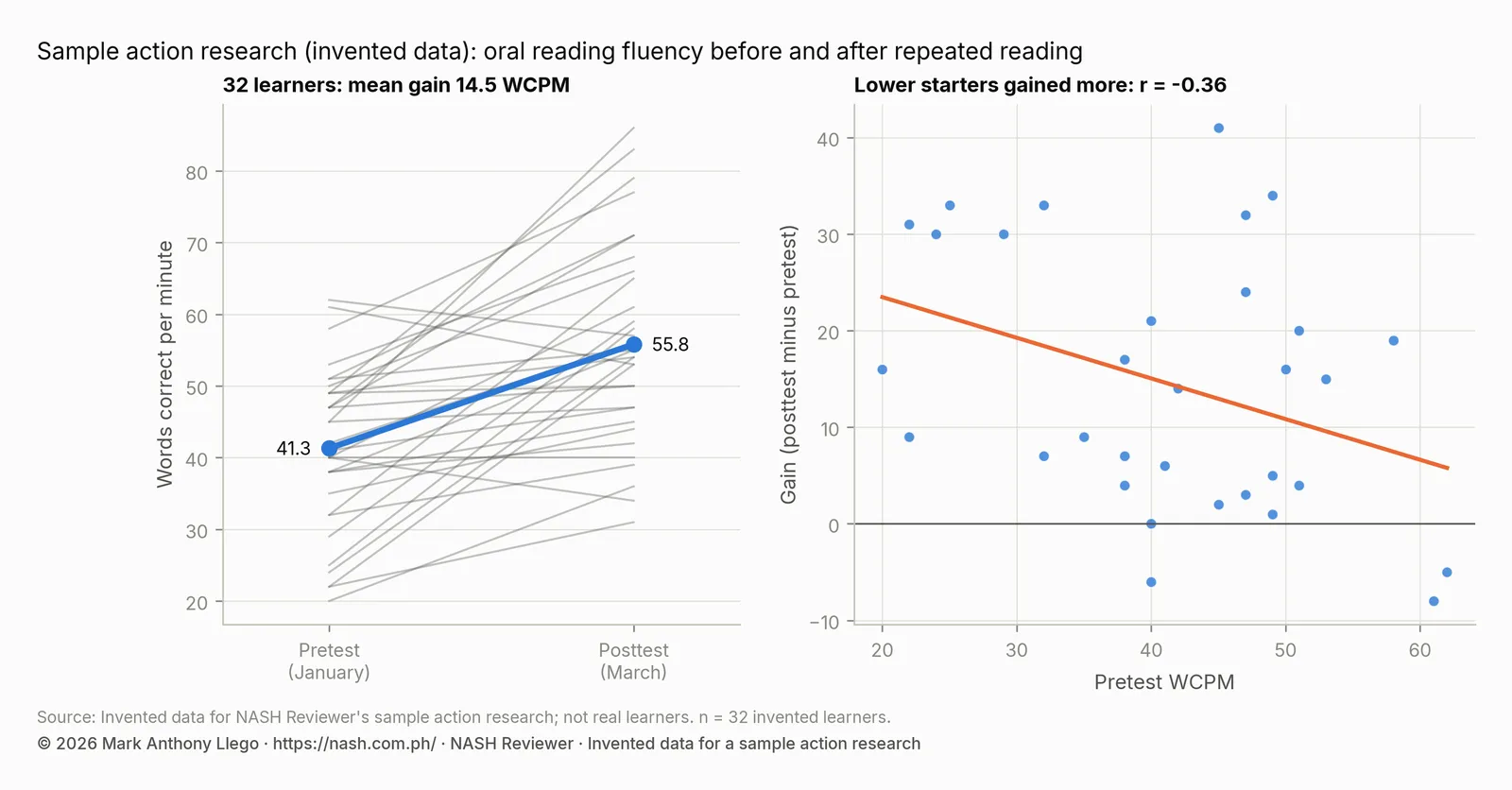
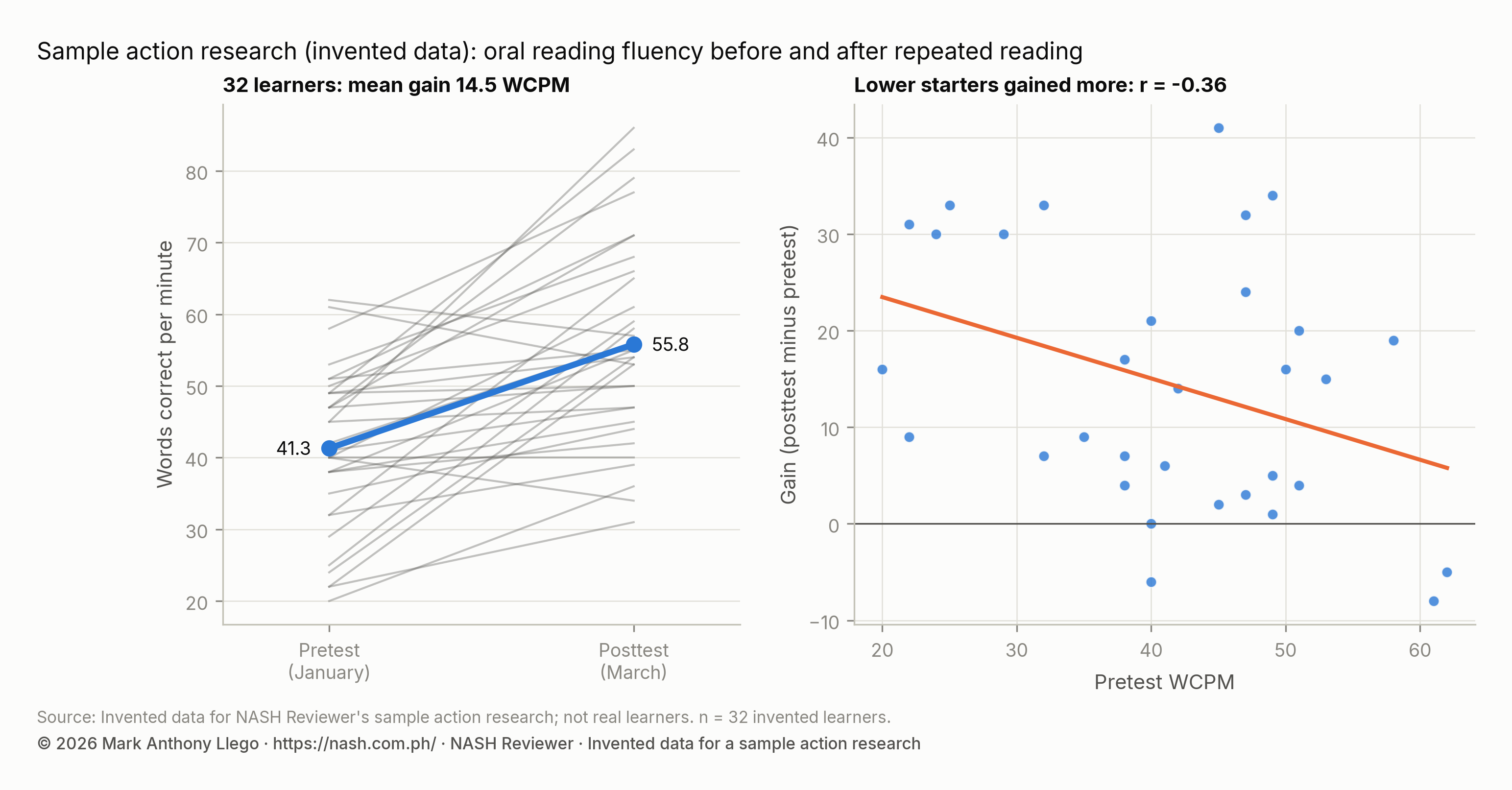
Mean SD Median Minimum Maximum Pretest 41.3 11.3 41.5 20 62 Posttest 55.8 14.1 54.5 31 86 Gain 14.5 13.4 14.5 −8 41 The mean rose by 14.5 words correct per minute, from 41.3 to 55.8. Twenty-eight of the 32 learners improved, 17 of them by 10 words or more; one read the same number of words, and 3 read 5 to 8 fewer at the posttest.
Question 2: Is the difference significant?
Table 2. Paired t-test (Excel output; Variable 1 = posttest, Variable 2 = pretest)
Posttest Pretest Mean 55.8125 41.3125 Variance 199.6411 127.8992 Observations 32 32 Pearson Correlation 0.4633 Hypothesized Mean Difference 0 df 31 t Stat 6.1225 P(T<=t) one-tail 4.3315E-07 t Critical one-tail 1.6955 P(T<=t) two-tail 8.6630E-07 t Critical two-tail 2.0395 The difference was significant, t(31) = 6.12, p < 0.001, so the null hypothesis was rejected. The 95% confidence interval for the mean gain was 9.7 to 19.3 words correct per minute, and the effect size was large, d = 1.08. The gains were roughly normally distributed (Shapiro-Wilk p = 0.20), as the paired t-test assumes.
Table 3. Mean gain by beginning-of-year CRLA level
CRLA level (Filipino) Learners Pretest mean Posttest mean Mean gain Low Emerging 4 22.2 44.5 22.2 High Emerging 7 32.6 49.7 17.1 Developing 9 42.0 56.1 14.1 Transitioning 12 52.2 62.9 10.7 All 32 41.3 55.8 14.5 Learners who started lower gained more: the correlation between the pretest and the gain was r = −0.36 (p = 0.046). Part of this pattern is likely regression to the mean: learners who scored lowest on one test tend to score closer to the average on the next, with or without an intervention.
Question 3: Learners’ and parents’ experience
Table 4. Themes from the interviews (8 learners, 8 parents; responses translated from Waray and Filipino)
Theme Learners Parents Sample responses Growing confidence in reading aloud 7 6 “Before, I was shy to read in front. Now I want to be first.” (I-L3) / “He now reads the signs on the way to the market.” (I-P6) The value of a predictable daily routine 6 3 “Every morning we read the story again, so I am ready.” (I-L5) / “She tells me on Mondays what story they will read.” (I-P1) Little reading practice at home 5 7 “There are no books at home, only my brother’s notebook.” (I-L8) / “I leave for the farm before sunrise, so no one reads with him.” (I-P2) Confidence was the theme mentioned most by learners; little practice at home, by parents. Two parents asked whether the passages could be sent home.
Reflection
The routine was easy to keep: it needed ten minutes, printed passages and a timer, and the learners soon ran the partner reading on their own. Their fluency rose by a large amount in eight weeks, and the interviews suggest that their confidence rose with it.
We cannot say how much of the gain the intervention caused. With no comparison group, part of the rise could come from ordinary growth over eight weeks, from practice with the test, or, for the lowest starters, from regression to the mean. We were also the learners’ teachers and testers; the second scorer checked a quarter of the readings, but not blindly. The three learners whose scores fell, all of whom attended most sessions, remind us that a single week’s test is a noisy measure.
The Transitioning learners gained least. They already read fairly fluently, and their next need may be comprehension rather than speed; our measure counted speed and accuracy only. Next time we would add a short comprehension check, and we would compare our sections with sections that start the routine later, so that the difference between them can be measured.
The parents’ answers changed our plans most. Most families want to help, but few have reading materials at home or time in the morning. Sending the week’s passage home, with a short guide for parents, costs little and answers what they told us.
IX. Action Plan
| Activity | Objective | Persons involved | Timeline | Resources | Expected output |
|---|---|---|---|---|---|
| Present the results at a school LAC session | Share findings and decide on next steps | Research team, Grades 1 to 3 teachers, school principal | June 2026 | Report, slides | Decision on extending the routine |
| Extend the routine to all Grade 3 sections | Build fluency for all Grade 3 learners reading below grade level | Grade 3 advisers, reading coordinator | June to August 2026 | 8 weekly passages per level, timers | Routine running in every section; daily checklists |
| Send weekly passages home with a parent guide | Increase reading practice at home | Advisers, parents | From July 2026 | Printed passages and guides | Parents’ reading logs |
| Repeat the study with comparison sections | Measure the routine’s effect more firmly | Research team, school principal | SY 2026–2027 | BERF proposal, up to PhP 30,000 | Proposal submitted in the division’s BERF call |
| Present at the district research forum | Disseminate the results | Research team | As scheduled by the district | Report | Presentation and feedback |
X. References
Department of Education. (2012). DepEd child protection policy (DepEd Order No. 40, s. 2012). https://www.deped.gov.ph/wp-content/uploads/2012/05/DO_s2012_40.pdf
Department of Education. (2016). Adoption of the Basic Education Research Agenda (DepEd Order No. 39, s. 2016). https://www.deped.gov.ph/wp-content/uploads/2016/06/DO_s2016_039.pdf
Department of Education. (2017). Research management guidelines (DepEd Order No. 16, s. 2017). https://www.deped.gov.ph/wp-content/uploads/2017/03/DO_s2017_016.pdf
Department of Education. (2025). Multi-year implementing guidelines on the school calendar and activities (DepEd Order No. 012, s. 2025). https://www.deped.gov.ph/wp-content/uploads/DO_s2025_012.pdf
Department of Education. (2026). Foundational guidelines on artificial intelligence in basic education (DepEd Order No. 003, s. 2026). https://www.deped.gov.ph/2026/02/20/february-20-2026-do-003-s-2026-foundational-guidelines-on-artificial-intelligence-ai-in-basic-education/
Department of Education & Basic Education Sector Transformation Program. (2019). Action research toolkit: Teacher’s guide.
Hasbrouck, J., & Tindal, G. A. (2006). Oral reading fluency norms: A valuable assessment tool for reading teachers. The Reading Teacher, 59(7), 636–644. https://doi.org/10.1598/RT.59.7.3
National Institute of Child Health and Human Development. (2000). Report of the National Reading Panel. Teaching children to read: An evidence-based assessment of the scientific research literature on reading and its implications for reading instruction (NIH Publication No. 00-4769). U.S. Government Printing Office.
Samuels, S. J. (1979). The method of repeated readings. The Reading Teacher, 32(4), 403–408.
Therrien, W. J. (2004). Fluency and comprehension gains as a result of repeated reading: A meta-analysis. Remedial and Special Education, 25(4), 252–261. https://doi.org/10.1177/07419325040250040801
XI. Financial Report
| Item | Quantity | Unit cost (PhP) | Amount (PhP) |
|---|---|---|---|
| Printing of weekly passages, assessment passages, progress charts and forms | 1 lot | 1,850 | |
| Reading folders for learners | 32 | 15 | 480 |
| Digital timers | 2 | 250 | 500 |
| Snacks for the parents’ consent orientation | 32 | 40 | 1,280 |
| Certificates of participation for learners | 32 | 10 | 320 |
| Total | 4,430 |
Fund source: the researchers’ own funds. No school funds or grants were used.
Appendices
Appendix A. Data. Each learner’s code, section, sex, beginning-of-year CRLA level, sessions attended, and scores. Copy the table into Excel to repeat the analysis: the paired t-test on the two score columns gives Table 2.
| ID | Section | Sex | CRLA level (Filipino) | Sessions attended (of 39) | Pretest WCPM | Posttest WCPM | Gain |
|---|---|---|---|---|---|---|---|
| L01 | A | M | Low Emerging | 39 | 20 | 36 | 16 |
| L02 | A | M | Low Emerging | 38 | 25 | 58 | 33 |
| L03 | A | F | Low Emerging | 39 | 22 | 31 | 9 |
| L04 | B | M | Low Emerging | 34 | 22 | 53 | 31 |
| L05 | A | F | High Emerging | 36 | 32 | 65 | 33 |
| L06 | B | M | High Emerging | 37 | 35 | 44 | 9 |
| L07 | B | F | High Emerging | 36 | 29 | 59 | 30 |
| L08 | B | M | High Emerging | 35 | 38 | 45 | 7 |
| L09 | A | M | High Emerging | 34 | 38 | 42 | 4 |
| L10 | A | M | High Emerging | 31 | 24 | 54 | 30 |
| L11 | A | F | High Emerging | 37 | 32 | 39 | 7 |
| L12 | B | F | Developing | 36 | 41 | 47 | 6 |
| L13 | B | F | Developing | 38 | 45 | 47 | 2 |
| L14 | A | M | Developing | 36 | 38 | 55 | 17 |
| L15 | B | M | Developing | 39 | 40 | 61 | 21 |
| L16 | B | F | Developing | 34 | 40 | 34 | −6 |
| L17 | B | F | Developing | 35 | 47 | 79 | 32 |
| L18 | A | F | Developing | 36 | 40 | 40 | 0 |
| L19 | B | M | Developing | 35 | 42 | 56 | 14 |
| L20 | B | M | Developing | 39 | 45 | 86 | 41 |
| L21 | B | F | Transitioning | 35 | 53 | 68 | 15 |
| L22 | A | M | Transitioning | 39 | 61 | 53 | −8 |
| L23 | B | F | Transitioning | 35 | 51 | 71 | 20 |
| L24 | A | M | Transitioning | 33 | 49 | 54 | 5 |
| L25 | A | F | Transitioning | 38 | 50 | 66 | 16 |
| L26 | A | M | Transitioning | 39 | 49 | 83 | 34 |
| L27 | B | F | Transitioning | 36 | 49 | 50 | 1 |
| L28 | B | F | Transitioning | 39 | 51 | 55 | 4 |
| L29 | A | M | Transitioning | 38 | 47 | 71 | 24 |
| L30 | A | M | Transitioning | 38 | 47 | 50 | 3 |
| L31 | B | M | Transitioning | 39 | 62 | 57 | −5 |
| L32 | A | M | Transitioning | 35 | 58 | 77 | 19 |
Appendix B. Consent letter and assent script. Kept with the school, not in the archived report: DO 14, s. 2022 excludes consent forms and photographs from reports uploaded to DepEd’s research portal. Models are in DepEd Action Research Ethics: Consent, Assent and Privacy.
Appendix C. Interview guides. The learner and parent guides followed the models in Interview and FGD Guide Questions for Action Research.
Appendix D. Declaration of AI use (adapted from Annex A of DO 003, s. 2026):
We, the researchers, declare that we used a generative AI tool only to check the grammar of the English text of this report, for the purpose of finalizing the research study. The prompt used was: “Check the grammar of this paragraph. Do not change its meaning or add content.” We have reviewed, edited, and understood all the content, and we take full accountability for it. No names, Learner Reference Numbers, scores, or other personal or sensitive information were entered into the AI tool.
How to use this sample
- Copy the structure, not the content. Your problem, numbers, intervention and reflection must come from your own class. DO 16 requires an anti-plagiarism declaration, and copying a sample is plagiarism.
- Check your proposal against the scoring guide. DepEd’s scoring guide for action research proposals (Annex 4.b of DO 16) gives 30 points each to the rationale, the research questions and the methods, and 5 each to the work plan and the cost estimates.
- Report the limits. The reflection in this sample names four reasons the gain may not all be due to the intervention. Reviewers trust a study that knows its limits.
- Keep the data. Appendix A lets anyone check the results; your school and division may ask for yours.
Common mistakes this sample avoids
- No intervention, or an intervention described in one line. Section V describes what happens each day.
- Results without numbers, or a p-value without the means and the effect size.
- Claiming that the intervention “is effective” for everyone on the basis of one group with no comparison.
- Names, photographs or LRNs in the report.
- A reflection that only praises the study.
- An action plan with no dates or persons responsible.
Frequently asked questions
Is this a real action research?
No. It is an invented study, written to show every part of a DepEd action research. Basey I Central Elementary School is a real public school used only as a setting; it did not conduct this study, and the people, data and results are fictional. The photographs show the school’s real classrooms.
What are the parts of a completed action research in DepEd format?
Under Annex 6 of DO 16, s. 2017: title page; abstract; acknowledgment; context and rationale; innovation, intervention and strategy; action research questions; action research methods; discussion of results and reflection; action plan; references; and financial report. The Action Research Toolkit adds a table of contents and appendices.
What statistical test does a pretest-posttest action research use?
For one group measured twice, a paired t-test, with an effect size. In Excel, use Data Analysis > t-Test: Paired Two Sample for Means, with the posttest as Variable 1.
Can I copy this sample action research?
Use it as a model for the structure and the level of detail. Your study must describe your own problem, learners, data and reflection; copying another study’s content is plagiarism under DepEd’s research guidelines.
More on DepEd research
- Start here: DepEd Action Research Guide: From Topic to Report
- DepEd Action Research Report Format, With a Sample
- DepEd Action Research Proposal Format, With a Sample
- Paired and Independent t-Test in Excel for Action Research
- Pretest-Posttest Design and Regression to the Mean
- Thematic Analysis for Action Research: Steps and Sample
- How to Cite DepEd Orders in APA 7 and Write the Abstract
- Action Research in LAC Sessions: A School Head’s Guide
Sources
- DepEd Order No. 16, s. 2017, Research Management Guidelines, Annexes 2, 3, 4.b and 6
- DepEd Order No. 012, s. 2025, Multi-Year Implementing Guidelines on the School Calendar and Activities
- DepEd Order No. 003, s. 2026, Foundational Guidelines on Artificial Intelligence in Basic Education, Annex A
- DepEd Order No. 40, s. 2012, DepEd Child Protection Policy
- Department of Education and the Basic Education Sector Transformation (BEST) Program. (2019). Action Research Toolkit: Teacher’s Guide, sections 2.2, 3.1, 4.1, 5.3, 5.4 and 6.2, with support from the Australian Government.
Written by Mark Anthony Llego for NASH Reviewer. The study, its data and its participants are invented; the data were generated and analyzed in Python, and the school is used only as a setting. The photographs of the school are real, with learners’ faces and a name blurred. NASH Reviewer is not affiliated with DepEd.