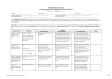
A finished School Improvement Plan (SIP) is a short document of four chapters with a set of filled-in forms behind it. Department of Education (DepEd) Order No. 44, s. 2015 and its SIP Guidebook set the process and the forms: a Gap Analysis Template, a rubric for choosing Priority Improvement Areas (PIAs), a Planning Worksheet, a Project Work Plan and Budget Matrix, and a template for the Annual Implementation Plan (AIP). The sample on this page fills in each of them for one invented school, Tala Elementary School, from its first data to its year-end monitoring report.
Three later texts shape how the plan is written and checked, and none had been replaced as of November 18, 2026. DepEd’s 2018 design template sets the SIP out in four chapters. Its SIP Quality Assessment (QA) Tool is the rubric a Schools Division Office (SDO) rates the plan with before the superintendent approves it. And DepEd Order No. 008, s. 2019, the school MOOE order, makes the AIP follow a calendar-year format. No DepEd order has replaced DO 44, s. 2015 or changed its steps and forms.
The eleven steps, the planning team’s seats and the School Report Card (SRC) are explained one by one in DepEd School Improvement Plan (SIP): Steps, AIP and SRC. School planning is strand 1.2 of the Philippine Professional Standards for School Heads (PPSSH), adopted by DepEd Order No. 024, s. 2020.
Key findings
- A SIP covers three consecutive school years, and each year has its own AIP. DO 44, s. 2015 says so (para. 2), and two later orders define the SIP the same way, as “a three-year roadmap” (DepEd Order No. 026, s. 2022, Definition of Terms, item 15; DepEd Order No. 035, s. 2025, item 10.23).
- The written plan has four chapters. In DepEd’s 2018 design template they are the DepEd Vision, Mission and Core Values (one to two pages), Assess (three to five pages), Plan, and Monitoring and Evaluation. Interview notes and process flowcharts go in the plan’s annexes.
- The school sends its SIP to the division once in three years, and an AIP every year. With each AIP go the previous year’s Project Monitoring Report Forms and the year-end SRC, “no later than the second week of May” (DO 44, s. 2015, Encl., Sec. V.A.3).
- Priority areas are chosen with a rubric of four criteria. Each improvement area is rated from 1 to 5 on strategic importance, urgency, magnitude and feasibility, and an average of 4.5 or more is a “Very High Priority” (SIP Guidebook, Activity 2.2).
- For school MOOE, the AIP is a calendar-year document. MOOE funds “activities as identified in the approved School Improvement Plan (SIP)” as determined in an AIP “which shall follow the calendar year format (Annex 1)” (DO 008, s. 2019, Sec. V.D.1). That format runs from January to December and adds the next January to March.
- The division’s QA Tool rates nine characteristics of the plan at Below, Meets or Exceeds Expectation. A Division Appraisal Committee of at least seven members uses it, and the Schools Division Superintendent (SDS) approves the plan and issues a Certificate of Acceptance (SIP QA Tool and SIP Appraisal Process, November 2018).
- Orders issued since 2019 add lines to the plan. A school’s SIP now carries its language learning strategy for Kindergarten to Grade 3, for one (DepEd Order No. 020, s. 2025, para. 39), and literacy and numeracy among its PIAs where the school receives the School Innovation and Improvement Fund (DepEd Memorandum No. 048, s. 2026, para. 3.a).
The SIP cycle: three years, eleven steps
The SIP Guidebook orders the work as preparatory activities and three phases, Assess, Plan and Act, in eleven numbered steps. The AIP, “which is the year-by-year plan, likewise undergoes these three phases” (DO 44, s. 2015, Encl., Sec. V.A.2), so the school walks the steps three times in one SIP. Pick a year and a step below to see who does it, in which months, what it leaves behind, and what the sample school did.
DepEd Order No. 44, s. 2015: the SIP Guidebook
Three years, eleven steps, one line
Pick a year of the plan, then a step. Each turn of the line is one year’s Annual Implementation Plan.
- Preparatory Activities
- Phase 1: Assess
- Phase 2: Plan
- Phase 3: Act
- Back to Assess
Preparatory Activities January - March
Step 1. Prepare for SIP Development
School Head with Team
The school head and a small team gather the school's and the community's data, invite the planning team and convene it for a day.
- 1.1 Gather and organize the necessary data
- 1.2 Form the SPT
- 1.3 Convene the SPT for orientation, vision sharing, and scheduling
What the step leaves
- School-Community Data Template [Annex 1A]
- Child Mapping Tool [Annex 1B]
- School Report Card
- Child-Friendly School Survey [Annex 2A]
- Child Protection Policy Implementation Checklist [Annex 2B]
- School Watching Checklist and Hazard Map [Annex 2C]
- List of members for the SPT with their representations
- Documentation of vision sharing
- List of SPT Roles and Responsibilities
- SPT Timetable
In Years 2 and 3
Forming and convening the planning team happen once in the three years. The data are gathered again each year:
“Data gathering for year 2 and 3 shall be done from January to March.” (The SIP Process Flowchart, note)
At Tala Elementary School (a sample)
The school head and two teachers filled the School-Community Data Template in two weeks, drew a first School Report Card from it, and seated a planning team of nine: the head, a Grade 6 learner, a teacher, two parents, a barangay kagawad, a member of the barangay's disaster council, a member of the Child Protection Committee and an alumna.
SIP Guidebook, Step 1, Activities 1.1 to 1.3
Phase 1: Assess January - March
Step 2. Identify/Review Priority Improvement Areas
School Head with TeamSchool Planning Team
The planning team reads the School Report Card, sets the school's data beside the Division's targets, lists the improvement areas and rates each one.
- 2.1 Present and discuss the information gathered during the preparatory activitiesSchool Planning Team
- 2.2 Identify/Review the Priority Improvement Areas (PIAs)School Planning Team
What the step leaves
- Documentation of the discussion and initial list of improvement areas
- Gap Analysis Template [Annex 3]
- PIA Template [Annex 4]
- First column of the Planning Worksheet [Annex 5]
In Years 2 and 3
“After your first year of AIP implementation, begin with this step in planning for year 2 or year 3. Present to the SPT the data you have collected from monitoring the progress of your prior implementation.” (Activity 2.1)
At Tala Elementary School (a sample)
Five improvement areas went on the list. Reading in Grades 4 to 6 averaged 4.75, a very high priority; absences in Grade 5 and flooding of the grounds tied at 3.50.
SIP Guidebook, Step 2, Activities 2.1 and 2.2
Phase 1: Assess January - March
Step 3. Analyze the Priority Improvement Areas
School Planning TeamProject Team
The planning team sets a general objective for each area and forms a project team, which listens to learners, walks the school process, picks one problem and finds its root cause.
- 3.1 Set General ObjectivesSchool Planning Team
- 3.2 Organize the Project TeamsSchool Planning Team
- 3.3 Listen to the voice of the learners and other stakeholdersProject Team
- 3.4 Analyze the school processesProject Team
- 3.5 Select Area of FocusProject Team
- 3.6 Do Root Cause AnalysisProject Team
- 3.7 Present Root Cause to SPTProject Team
What the step leaves
- Objectives and Year columns in the Planning Worksheet [Annex 5]
- Project Team member list with roles and responsibilities or Team Charter
- List of possible factors affecting your assigned PIA
- Documentation from FGDs, interviews, or home visits
- Flowchart of the school processes relevant to each PIA with storm clouds
- Documentation of interviews or observations
- Problem statement based on your area of focus
- Diagrams showing the root cause
- Presentation (in PowerPoint or hard copy) of the root cause, with the supporting data, process flowchart, and area of focus
In Years 2 and 3
“This step should still be done when analyzing the PIAs for year 2 or 3 because the context, needs, and views of learners and stakeholders might have changed over time.” (Activity 3.3)
At Tala Elementary School (a sample)
The reading team interviewed Grade 4 learners in pairs and threes, visited six homes and watched three Friday remedial sessions. Its problem statement: 34 of the 58 Grade 4 learners reading below grade level attended fewer than half of the sessions.
SIP Guidebook, Step 3, Activities 3.1 to 3.7
Phase 2: Plan April - May
Step 4. Review General Objectives and Targets
School Planning Team
With the root cause known, the planning team writes it into the Planning Worksheet and checks that each general objective still fits.
What the step leaves
- Root Cause column in the Planning Worksheet [Annex 5]
In Years 2 and 3
“If you are planning for your year 2 or year 3 AIP, revisit the objectives in the Planning Worksheet taking note of the root cause that was reviewed by the Project Team.” (Step 4)
At Tala Elementary School (a sample)
The objective stayed, and the root cause went into the worksheet: the one weekly session starts 50 minutes after Grade 4's last class, and most of the learners who need it go home in that gap.
SIP Guidebook, Step 4
Phase 2: Plan April - May
Step 5. Formulate Solutions
Project Team
The project team brainstorms solutions to the root cause and holds each one to the guidebook's five considerations.
What the step leaves
- List of possible solutions
In Years 2 and 3
Done again in each year’s plan.
At Tala Elementary School (a sample)
Three ideas were listed. The team kept one: three 40-minute reading sessions a week that begin when the last class ends, with learners grouped by reading level.
SIP Guidebook, Step 5
Phase 2: Plan April - May
Step 6. Develop Project Designs
Project Team
Each solution becomes one project design: its problem statement, objective, activities, outputs, dates, persons responsible, budget and the dates of monitoring.
What the step leaves
- Project Work Plan and Budget Matrix
In Years 2 and 3
“For PIAs that span for more than a year, set incremental targets for each year.” (Step 6)
At Tala Elementary School (a sample)
The After-Class Reading Project: eight activities, ₱12,000 from the school's MOOE and ₱2,400 from a PTA donation, to be monitored in November and in March.
SIP Guidebook, Step 6
Phase 2: Plan April - May
Step 7. Write the School Improvement Plan
School Planning Team
The planning team writes the plan in the guidebook's four parts, every member signs it, and the school submits it to the Schools Division Office.
What the step leaves
- SIP with signatures of SPT members
In Years 2 and 3
A first-year step: the plan is written and submitted once in the three years.
“You only need to submit this at the beginning of the three-year SIP cycle.” (Step 7)
At Tala Elementary School (a sample)
All nine members signed the plan, and the school sent it to the division in the second week of May.
SIP Guidebook, Step 7
Phase 2: Plan April - May
Step 8. Prepare the Annual Implementation Plan
School Planning Team
From the plan's general objectives, the planning team lists the year's projects, activities, schedule, budget and persons responsible, and attaches the project designs.
What the step leaves
- AIP Template
In Years 2 and 3
“Please attach a copy of the project designs to the AIP so you can easily go back to it when you review the implementation of your AIP for years 2 and 3.” (Step 8)
At Tala Elementary School (a sample)
The Year 1 AIP carried three projects: the After-Class Reading Project, a second on Grade 5 absences, and a third on flooding, whose main activity, desilting the canal, the barangay pays for.
SIP Guidebook, Step 8
Phase 3: Act June - January
Step 9. Test the Solutions
Project Team
The project team tries the solution on a small group, compares the data before and after, and tells the process owners what it found.
What the step leaves
- Data from testing the solutions
- Communication plan to concerned stakeholders (process owners)
In Years 2 and 3
Done again in each year’s plan.
At Tala Elementary School (a sample)
One Grade 4 section held the sessions for eight weeks. Of its 20 learners reading below grade level, 18 attended at least four of every five sessions.
SIP Guidebook, Step 9
Phase 3: Act June - January
Step 10. Roll out the Solutions
Project Team
The process owners, not the project team, carry the tested solution across the school; the project team trains them and gathers their feedback.
What the step leaves
- Training plan and other interventions to roll out your solutions
- Plan to gather feedback from concerned stakeholders
In Years 2 and 3
Done again in each year’s plan.
At Tala Elementary School (a sample)
From September the three Grade 4 advisers held the sessions in their own sections, and the adviser who tested them showed the others how she grouped her learners.
SIP Guidebook, Step 10
Back to Assess June - January
Step 11. Check Progress of AIP
School Planning TeamProject Team
The planning team monitors each project at the middle and at the end of its run, the project team reports on the Project Monitoring Report Form, and the results go into the School Report Card.
What the step leaves
- Project Monitoring Report Form
- Updated SRC based on results and reports
In Years 2 and 3
“The cycle for the next AIP begins with Step 2: Identify/Review PIAs.” (Step 11)
At Tala Elementary School (a sample)
In November, 66 of the 120 Grade 4 learners read at grade level, up from 60 in June. The team's one issue, sessions lost to school programs, became an action point.
SIP Guidebook, Step 11
What goes to the Schools Division Office, no later than the second week of May
- Year 1SIP + AIP (Y1) + Project Monitoring Report Forms (Y3) + year-end SRC
- Year 2AIP (Y2) + Project Monitoring Report Forms (Y1) + year-end SRC
- Year 3AIP (Y3) + Project Monitoring Report Forms (Y2) + year-end SRC
“After year 3, the SPT can now prepare the SIP for the next cycle. During this time, your SDO will conduct a visit to your school to do a summative evaluation of your SIP.” (Step 11)
DepEd Order No. 44, s. 2015, Enclosure, Sec. V.A.3
Source: DepEd Order No. 44, s. 2015: SIP Guidebook, The SIP Process Flowchart (p. 5), The SIP Cycle (p. 7) and Steps 1 to 11; Enclosure, Sec. V.A.3.
Years 2 and 3 do not begin at Step 1. The guidebook’s flowchart draws an arrow marked “For Year 2 and 3” back to Step 2, and Step 11 says “The cycle for the next AIP begins with Step 2: Identify/Review PIAs.” The planning team is already seated, so what repeats is the review: the team reads the monitoring results, checks whether each PIA still stands, and rates the list again if the school’s situation has changed. The data are gathered again every year: “Data gathering for year 2 and 3 shall be done from January to March” (flowchart, note).
The SIP itself is written and submitted once. “You only need to submit this at the beginning of the three-year SIP cycle” (SIP Guidebook, Step 7). What the SDO collects each May is in the order’s own table:
| Year of the cycle | What the school passes to the SDO |
|---|---|
| Year 1 | The SIP, the AIP for Year 1, the Project Monitoring Report Forms of Year 3 of the previous cycle, and the year-end SRC |
| Year 2 | The AIP for Year 2, the Project Monitoring Report Forms of Year 1, and the year-end SRC |
| Year 3 | The AIP for Year 3, the Project Monitoring Report Forms of Year 2, and the year-end SRC |
The documents “are expected to be collected no later than the second week of May to give sufficient time for the SDO to coach and mentor the schools before they launch their projects for the school year” (DO 44, s. 2015, Encl., Sec. V.A.3). After Year 3 the SDO conducts “a summative evaluation of the SIP at the end of every cycle” (Sec. V.A.4), and the team prepares the next plan.
Which year of the cycle is your school in?
DO 44, s. 2015 told schools to begin the first enhanced cycle “by January 2016” (para. 5), and the Central Office’s memorandum of November 27, 2018 says the three-year cycle “commenced in SY 2016-2017”. Counted in threes from that start, a school that has kept to three-year plans is in its fourth cycle, School Year (SY) 2025-2026 to SY 2027-2028, and SY 2026-2027 is its Year 2. On the guidebook’s calendar, its planning team reviews the PIAs from January to March 2027 and sends the Year 3 AIP to the division by the second week of May 2027.
Not every school is on that count. DepEd Region VIII’s Regional Memorandum No. 301, s. 2023, for one, describes its schools’ 2023-2028 SIPs as six-year plans. The Basic Education Development Plan 2030, adopted by DepEd Order No. 024, s. 2022, keeps the SIP at “three consecutive years” under six-year regional and division plans, and lists a “Revised SIP policy” among its planned outputs. As of November 18, 2026, DepEd has issued none. Your division’s memorandum on the SIP names the cycle your school is in.
What a finished SIP contains
The guidebook’s own outline has four parts (Step 7): the DepEd Vision, Mission, and Core Values Statement; the School’s Current Situation; the Planning Worksheet; and Monitoring and Evaluation. Under them come the names and signatures of the School-Community Planning Team (SPT). The order asks that the plan “be signed by all the SPT members to ensure its ownership and accuracy” (DO 44, s. 2015, Encl., Sec. V.A.2).
In November 2018 DepEd’s Central Office released a design template and a styleguide that keep those parts and set them out as four chapters. The Planning Worksheet moves into Chapter 2, and a new Chapter 3 holds the solutions, the project designs and the first AIP.
Pick a page to see what the template puts on it.
DepEd’s design template for the SIP, November 2018
The plan as a document
Ten parts, in the template’s order. Pick a page to see what it holds, how long it should run, and which characteristics of the QA Tool rate it.
Before the chapters
Title page
The school's name, ID and address over the plan's name and the school years it covers.
The page prints
- NAME OF SCHOOL
- School ID
- School Address
- ENHANCED SCHOOL IMPROVEMENT PLAN
- School Year 20xx-20xx
Design template for the SIP (2018), title page
Before the chapters
MESSAGE (OPTIONAL)
A page the school may leave out. Where it is kept, it is the school head's or the planning team's word to the reader, not a place for data.
The page prints
- MESSAGE (OPTIONAL)
Design template for the SIP (2018), p. i
Before the chapters
TABLE OF CONTENTS
Four chapters and two lists, each with its page.
The page prints
- CHAPTER 1. Department of Education’s Vision, Mission, and Core Values Statement
- CHAPTER 2. School’s Current Situation
- CHAPTER 3. Plan
- CHAPTER 4. Monitoring and Evaluation
- List of Acronyms
- List of Tables and Illustrations
Design template for the SIP (2018), p. ii
Before the chapters
LIST OF ACRONYMS, and LIST OF TABLES AND ILLUSTRATIONS
Every acronym the plan uses, spelled out once, and every table and illustration with its page, so a reader outside the school can follow the chapters.
The page prints
- LIST OF ACRONYMS
- LIST OF TABLES AND ILLUSTRATIONS
Design template for the SIP (2018), p. iii
Chapter1 to 2 pages suggested
CHAPTER 1. Department of Education’s Vision, Mission, and Core Values Statement
A record of what the planning team said and agreed, not a copy of DepEd's vision and mission. A chapter that only restates them is below expectation on the QA Tool.
The template’s content check
- Documentation of the Vision Sharing activity, their aspirations for the school and learners and their insights on DepEd VMV and Core Values
- List of roles and responsibilities of all SPT members
- SPT Timetable
The QA Tool rates it on
- Clarity and completeness of discussion on DepEd VMV
Documents the tool names
Minutes of the meeting
“This chapter presents the documentation of matters that transpired during the Vision Sharing activity.” (Design template for the SIP (2018), Chapter 1)
Chapter3 to 5 pages suggested
CHAPTER 2. Assess
The longest chapter to write and the one the QA Tool rates most: five of its nine characteristics. The template's contents page calls it School's Current Situation.
The template’s content check
- School’s Current Situation (brief discussion) with Initial List of Improvement Areas (PIAs)
- List of PIAs (Annex 4)
- Annex 5 or Planning Worksheet - completely filled out with the following information: priority improvement areas, general objectives, targets, and root causes.
The QA Tool rates it on
- Clarity and completeness of discussion on School’s CURRENT SITUATION
- Alignment and Relevance of PRIORITY IMPROVEMENT AREAS (PIAs) to Intermediate Outcomes (IOs)
- Responsiveness of the GENERAL OBJECTIVES to PIAs
- Feasibility of the TARGETS
- Clarity and completeness of the ROOT CAUSE ANALYSIS (RCA) process
Documents the tool names
SCDT Templates (Annexes 1A - 2C); School Report Card; Gap Analysis Template (Annex 3); Previous SIP (if applicable); Prioritization Template/ Rubrics (Annex 4); Planning Worksheet (Annex 5); Documentation of Listening to the Voice of Learners and other Stakeholders; Root Cause Analysis Diagram (Annex 8)
“It has five (5) sections, namely: school’s current situation, priority improvement areas, general objectives, targets, and root causes.” (Design template for the SIP (2018), Chapter 2)
ChapterNo length suggested
CHAPTER 3. Plan
A short chapter with long attachments: one project work plan for each solution, and the first year's AIP.
The template’s content check
- List of Solutions
- Project Work Plan and Budget Matrix (Annex)
- Annual Implementation Plan Year 1 (Annex)
The QA Tool rates it on
- Appropriateness of the major activities in the identified SOLUTION(s)
- Comprehensiveness of the ANNUAL IMPLEMENTATION PLAN (AIP)
Documents the tool names
Project Workplan and Budget Matrix (Annex 9); Annual Implementation Plan (Annex 10); OPCRF
“Present a matrix containing root causes and corresponding solution.” (Design template for the SIP (2018), Chapter 3)
ChapterNo length suggested
CHAPTER 4. Monitoring and Evaluation
The monitoring form of every Year 1 project, each with its project's name, its objectives and targets, and the dates the planning team will monitor it.
The template’s content check
- Project Monitoring Report Forms
The QA Tool rates it on
- Completeness of the MONITORING PLAN
Documents the tool names
Project Monitoring Report Form (PMRF)
“Write 2-4 sentences describing the Project Monitoring Report Form to enlighten the readers who were not involved in the preparation of SIP.” (Design template for the SIP (2018), Chapter 4)
After the chapters
Annexes of the SIP
The project teams' working papers: interview and focus group notes, the process flowchart with its storm clouds, the root cause diagram. They are the evidence the QA Tool’s row on root cause analysis looks for.
“There are processes involved prior to the conduct of the actual Root Cause Analysis (RCA), like the conduct of FGDs and interviews with learners and other stakeholders, and analysis of specific school process involved in the assigned PIA to identify storm clouds and area of focus. These are not required to be included in this Section, but shall be part of the Annexes of the SIP.” (Design template for the SIP (2018), Chapter 2)
After the chaptersFrom the SIP Guidebook and the order
Prepared by the School-Community Planning Team composed of the following:
Every member of the planning team signs. The guidebook's own outline of the plan ends with this list.
The page prints
- SPT Member Name
- Signature
“Once the SIP is prepared, it shall be signed by all the SPT members to ensure its ownership and accuracy.” (SIP Guidebook, Step 7; DepEd Order No. 44, s. 2015, Encl., Sec. V.A.2)
Source: DepEd, Enhanced School Improvement Plan design template and SIP Styleguide (BHROD-SED, November 2018); SIP Quality Assessment (QA) Tool; SIP Guidebook, Step 7; DepEd Order No. 44, s. 2015, Encl., Sec. V.A.2.
Chapter 1 is suggested at one to two pages and Chapter 2 at three to five. The template sets no length for Chapters 3 and 4, which are mostly attachments. Chapter 2 may add the school’s achievements, in a passage that “should not exceed one (1) page”.
The project team’s working papers stay out of the chapters. Focus group and interview notes, the process flowchart and the storm clouds “are not required to be included in this Section, but shall be part of the Annexes of the SIP” (design template, Chapter 2). They still matter: the QA Tool’s row on root cause analysis asks for “evidence of the RCA process”.
The template and the styleguide came with a memorandum, not an order, and the same memorandum lets divisions customize the appraisal. Ask your SDO for the template it appraises against. DepEd’s files are free to download: the SIP Guidebook and its annexes, and the QA Tool, appraisal process, styleguide and design template.
A sample SIP, form by form
Tala Elementary School is invented. It has about 700 learners from Kindergarten to Grade 6, in a barangay that floods in heavy rain. Its planning team listed five improvement areas and took on three as PIAs. The sheets below follow one of them, reading in Grades 4 to 6, from the gap analysis to the year-end monitoring report. Each heading and instruction is the form’s own; each entry is the school’s.
A sample: Tala Elementary School, an invented school
One school's plan, form by form
Open a form. Its headings are DepEd’s, as printed; the entries are one invented school’s, from its first data to its year-end report.
Annex 3 Step 2, Activity 2.1 School Planning Team
GAP ANALYSIS TEMPLATE
One row for each Division target: is the school helping to reach it, and what holds the school back? A gap in a row puts an area on the list of improvement areas.
The form’s instruction Use the matrix on the next page as a guide in assessing the gap between your Division Targets (A) and school performance (B).
- A. DIVISION TARGETS
- At least 75% of Grade 4 to 6 learners read at grade level by the end of Year 3The Division's plan. The Schools Division Office gives schools a copy.
- B1. DATA NEEDEDWhat data do we need to assess our school performance against this Division Target?
- Reading assessment results of Grades 4 to 6 for the last three school years, by grade and by sexThe School-Community Data Template (Annex 1A)
- B2. CURRENTLY CONTRIBUTINGIs our current school performance contributing to the attainment of this Division Target? How is it contributing or not contributing? Explain.
- No. 52% of Grade 4 to 6 learners read at grade level, and the share has stayed between 50% and 54% for three years.
- B3. INHIBITING FACTORSIf contributing, what are the factors that prevent us from contributing further to this Division Target? If not contributing, what are the factors that prevent us from contributing to this Division Target? Include the most pressing needs or problems from available data.
- Remedial reading reaches few of the learners who need it. Teachers receive class averages, not each learner's reading level. Grades 4 to 6 have few leveled reading materials.
- B4. PROJECTS IMPLEMENTEDWhat school projects being implemented are geared towards the attainment of this Division Target? If no such projects are being implemented, leave it blank.
- Remedial reading on Friday afternoons
- B5. GROUPS THAT REQUIRE ATTENTIONAre there groups in our school that require specific attention concerning the attainment of this Division Target? (e.g., considering gender, socio-economic status, ethnicity).
- Grade 4 learners. Boys, who are 36 of the 58 Grade 4 learners reading below grade level.
The form has one row for each Division target. This is the reading row; the school filled five.
SIP Guidebook, Annex 3
Annex 4 Step 2, Activity 2.2 School Planning Team
IDENTIFY PRIORITY IMPROVEMENT AREAS
Each improvement area is rated from 1 to 5 on four criteria. The average ranks the areas, and the areas the school takes on become its priority improvement areas.
The form’s instruction Using the matrix on the next page, please rate each improvement area on five criteria using a 5-point scale as described below.
Annex 4's matrix ends at Feasibility; the Average and Interpretation columns are the ones the guidebook's own sample matrix adds (Activity 2.2). The instruction says five criteria and the form lists four.
SIP Guidebook, Annex 4 and Activity 2.2
Annex 5 Steps 2, 3 and 4 School Planning Team
PLANNING WORKSHEET
The plan on one sheet: each priority improvement area beside the outcome it serves, its general objective, its root cause and the years it will take. It is Part III of the guidebook's outline of the SIP, and sits in Chapter 2 of the 2018 design template.
The form’s instruction Align your input into the appropriate learning stage and intermediate outcomes.
PLANNING WORKSHEET for ACCESS and QUALITY
The PIA column, which the guidebook calls the worksheet's first, is filled at Step 2, the objectives and years at Activity 3.1, and the root causes at Step 4, after the project teams report. The reading row's Year 1 box is 56%, not 60%, because the first year's project reaches Grade 4 only. Annex 5 has a second sheet for governance, with three intermediate outcomes of its own.
SIP Guidebook, Annex 5; Activity 2.2, Activity 3.1 and Step 4
No form: Activities 3.4 to 3.6 and Annex 8 Step 3, Activities 3.4 to 3.6 Project Team
Area of focus and root cause
The guidebook prints no form for this: the sheet is the sample’s own
The project team's working papers. They are not pages of the SIP's chapters; DepEd's 2018 design template puts them in the plan's annexes, and the appraisal looks for them as evidence of the root cause analysis.
- School process observed
- Remedial reading for Grade 4, from the beginning-of-year reading assessment to the Friday sessionActivity 3.4: a flowchart of what is happening now, drawn from direct observation
- Storm clouds
- Advisers received class averages, not each learner's reading level, three weeks after the assessment. 34 of the 58 learners reading below grade level attended fewer than half of the Friday sessions. One reading teacher handled up to 31 learners in a session.Problems seen at one activity of the process: specific, measurable and observable
- Problem statementWhat is the magnitude of the problem? How often is it happening? Where is it happening? When does it happen?
- From June to August, 34 of the 58 Grade 4 learners reading below grade level attended fewer than half of the Friday remedial reading sessions.Activity 3.5: the storm cloud which, when addressed, will clearly affect the PIA
- Why-why Diagram
- Why did they miss the sessions? They had gone home. Why? The session starts at 3:30 p.m., 50 minutes after their last class. Why do they not wait? 27 of the 34 walk home with younger brothers and sisters or ride a shared tricycle, and no one is assigned to keep them in school. Why is there a gap? The session was set at the reading teacher's one free hour, on one day of the week.Annex 8 offers three tools: the Fishbone Diagram, the Why-why Diagram and the Problem Tree
- Root cause
- The one remedial session a week starts at 3:30 p.m. on Fridays, 50 minutes after Grade 4's last class; 27 of the 34 learners go home in that gap.Activity 3.6: observable, measurable, and not a solution
- Triangulation
- Three sources name the same cause: the attendance sheets of the sessions, interviews with 20 of the 34 learners in pairs and threes, and six home visits.Annex 8, Step 2: three or more data sources that identify the cause as direct
The counts are of the Grade 4 class of the school year in which the plan was written. The Year 1 project meets a new Grade 4 class, with counts of its own.
SIP Guidebook, Activities 3.4 to 3.6; Annex 8
Annex 9 Step 6 Project Team
Project Work Plan and Budget Matrix
One project design for one solution. The planning team writes the SIP and the AIP from it, and the form is attached to the AIP.
- Project Title:
- After-Class Reading Project
- Problem Statement:
- From June to August, 34 of the 58 Grade 4 learners reading below grade level attended fewer than half of the Friday remedial reading sessions.The output of Activity 3.5
- Project Objective Statement:
- To increase the share of Grade 4 learners reading at grade level from 50% to 60% by the end of Year 1The first year's share of the Planning Worksheet's objective: Grade 4 first, then Grades 5 and 6
- Root Cause:
- The one remedial session a week starts at 3:30 p.m. on Fridays, 50 minutes after Grade 4's last class; 27 of the 34 learners go home in that gap.The Planning Worksheet's root cause column
- The form’s note Please record also the date of monitoring per project
- The form’s note Please attach this form to the AIP template
Dates of monitoring by the planning team: the second week of November and the third week of March.
SIP Guidebook, Annex 9 and Step 6
Annex 10 Step 8 School Planning Team
ANNUAL IMPLEMENTATION PLAN
The year's slice of the plan: every project with its objective, the year's output and each activity's schedule, budget and person responsible.
The form’s instruction List down the activities that are required in each school year to implement the school improvement projects. Indicated for every activity are the schedule and venue, budget, and the person(s) responsible.
- SCHOOL YEAR
- Year 1 of the plan
- SCHOOL IMPROVEMENT PROJECT TITLE
- After-Class Reading ProjectThe project design's title
- PROJECT OBJECTIVE
- To increase the share of Grade 4 learners reading at grade level from 50% to 60% by the end of Year 1The project design's objective statement
- OUTPUT FOR THE YEAR
- Reading sessions three days a week in all three Grade 4 sections, and 60% of Grade 4 learners reading at grade level
- The form’s note You may add rows when necessary
The AIP lists every project of the year. This school's Year 1 AIP has two more, on Grade 5 absences and on flooding, set out the same way; the barangay pays for the flooding project's main activity, which the AIP lists under other funds.
SIP Guidebook, Annex 10 and Step 8
Printed in Step 11 Step 11 Project Team, then the School Planning Team
Project Monitoring Report Form
The project team's progress report at the middle and at the end of the project. The reports feed the School Report Card and go to the Schools Division Office with the next AIP.
- Scheduled Dates of Monitoring: Mid-year
- Second week of November
- Scheduled Dates of Monitoring: Year-end
- Third week of March
- The form’s note To be filled by Project Team
- The form’s note To be discussed by SPT and Project Team
The form marks columns 1 to 5 for the project team and column 6 for the planning team and the project team together.
SIP Guidebook, Step 11
The forms: DepEd Order No. 44, s. 2015, SIP Guidebook, Annexes 3, 4, 5, 8, 9 and 10 and Step 11. The entries: an invented school.
Gap Analysis Template (Annex 3)
The form has one row for each Division target, and five questions for each row: the data needed, whether the school is contributing, what holds it back, the projects already running, and the groups of learners that need attention. The SDO is to “provide copies of their division plans to guide the schools in objectives and targets setting” (DO 44, s. 2015, Encl., Sec. VI), so ask for the Division’s targets before the SPT meets.
A gap in a row puts an area on the school’s list. So does a problem the Division has no target for: “Areas with no accompanying Division targets but are pressing, alarming, stagnating, or worsening should also be included in your list of improvement areas” (SIP Guidebook, Activity 2.1). Tala’s flooding came onto its list that way.
Planning Worksheet (Annex 5)
The worksheet is the plan on one sheet, and it is filled in over three steps. The PIAs go into it at Step 2. The general objectives and the years go in at Activity 3.1. The root causes wait until Step 4, after the project teams have reported, because a team that writes the cause before it has listened to learners and watched the process is writing a guess.
The 2018 design template adds one instruction the 2015 form does not print: “write the target(s) for each objective statement, and identify if this will happen in Year 1, Year 2, or Year 3 of the SIP cycle”, and “The targets must be written in quantitative form.” The sample’s boxes carry 56%, 65% and 75% for that reason.
Each PIA sits on the row of a learning stage and an intermediate outcome, and the QA Tool checks that the PIAs “are aligned to IOs”. The outcomes printed on the 2015 form are not the ones DepEd plans by today.
| On the 2015 Planning Worksheet (Annex 5) | In the Basic Education Development Plan 2030 |
|---|---|
| Access and quality, for each of four learning stages: learners are in school and learning centers; access programs responsive to their needs; enjoy a learner-friendly environment; actively participate in their learning environment; attain learning standards; are well-rounded, happy and smart | Four intermediate outcomes: access, equity, quality, and resiliency and well-being |
| Governance: leaders and managers practice participative and inclusive management processes; internal systems and processes for continuous improvement are in place; a growing number of stakeholders take part in convergence mechanisms | Six enabling mechanisms for governance and management |
DepEd has not reissued Annex 5. Where your division has updated the worksheet, use the division’s. Where it has not, the 2015 form is still the one the QA Tool names, and writing the BEDP outcome beside each PIA costs one line. BEMEF: DepEd’s Monitoring and Evaluation Framework (DO 029) sets out the four outcomes and their indicators. The Quality Basic Education Development Plan 2025-2035, which DepEd launched in July 2025 and no order had adopted as of November 18, 2026, names five outcomes of its own: see Q-BEDP 2025-2035: DepEd’s 10-Year Plan and the PDP.
The problem statement and the root cause
No annex is a form for this sheet. The project team builds it from four of the guidebook’s activities: listening to learners (3.3), walking the school process (3.4), choosing one “storm cloud” as its area of focus (3.5), and finding the root cause (3.6). The problem statement answers four questions the guidebook prints: “What is the magnitude of the problem? How often is it happening? Where is it happening? When does it happen?”
Tala’s statement counts the learners (34 of 58), says how often (fewer than half of the sessions), where (Grade 4) and when (June to August). Its root cause is a 50-minute gap in the school’s own timetable, which the school can see, count and change. The guidebook asks for exactly that: the root cause “should be observable and measurable”, and “The root cause is not the solution”. Root Cause Analysis for the DepEd School Improvement Plan shows the fishbone diagram, the why-why diagram and the problem tree with school examples.
Project Work Plan and Budget Matrix (Annex 9)
“One project design should contain only one solution” (SIP Guidebook, Step 6). Before a solution earns a design, Step 5 holds it to five considerations: it should address the root cause, be within the control of the school, be economical, be sustainable, and have the support of the concerned stakeholders or process owners. Tala’s solution is three 40-minute reading sessions a week that begin when the last class ends. It passes all five: it closes the gap the root cause names, the timetable is the school’s to set, it costs ₱12,000 of MOOE in a year, it needs no outside funds after the first year’s folders, and the three Grade 4 advisers and the learners’ parents agreed to the days.
In a school today, sessions like these are the reading tutorials of the Academic Recovery and Accessible Learning (ARAL) Program. DepEd Order No. 018, s. 2025 lets a school hold them as “a pull-out strategy or tutorial sessions during regular class hours” or as an add-on “before or after school hours” (para. 60), and the three-term calendar has them “conducted after classes, for a duration of 30-60 minutes on designated days, two (2) to four (4) times per week” (DepEd Order No. 009, s. 2026, para. 13). Tala’s three after-class sessions sit inside both. The plan is also where the program belongs: “The ARAL Program and its activities shall be included in the School Improvement Plan and Annual Implementation Plan” (DO 018, s. 2025, para. 80).
The form’s note asks for the dates of monitoring, since “Each project will have to be monitored at least twice by the SPT – during the middle and during the end of the implementation period”. A major project that needs a long time to carry out should be cut into smaller ones: the guidebook wants “immediate results” the team can celebrate or improve.
Project Monitoring Report Form
The form has seven columns. The project team fills in the first five: the project’s name, its objectives and targets, the date of monitoring, the accomplishments or status to date, and the issues, problems or challenges. The sixth, recommendations and action points, is “To be discussed by SPT and Project Team”, and both sign the seventh.
The reports do three jobs. They feed the SRC presented at mid-year and year-end, they go to the SDO with the next AIP, and they open the next year’s Step 2. Tala’s year-end report already names its Year 2 work: extend the sessions to Grade 5. SMEA in DepEd: School Monitoring, Evaluation and Adjustment covers the review meetings around the form, and School Report Card and Transparency Board: DepEd Rules covers the report card.
How to choose Priority Improvement Areas with the rubric
A PIA is one of the “selected areas in school management, operations, and service delivery that need to be changed to improve the three key result areas in basic education: access, quality, and governance” (DO 44, s. 2015, Encl., Sec. IV). The guidebook’s rubric turns the planning team’s discussion into four ratings and one average. Rate your own school’s areas below; the figure opens with Tala’s.
SIP Guidebook, Activity 2.2 and Annex 4
Rate your own improvement areas
Name each improvement area and rate it from 1 (Very Low) to 5 (Very High) on the four criteria. Each numbered mark is an area’s average on the guidebook’s five bands.
From the highest average down
- Many Grade 4 to 6 learners reading below grade level4.75, Very High Priority
- Frequent absences in Grade 53.50, High Priority (tied)
- Flooding of the school grounds in heavy rain3.50, High Priority (tied)
- Low parent attendance at school meetings3.00, Moderate Priority
- Few working science kits2.50, Moderate Priority
Highest: Many Grade 4 to 6 learners reading below grade level, 4.75, Very High Priority. Also tied: 2 areas at 3.50. The rubric has no tie-breaker; the team decides.
The four criteria and the scale, in the guidebook’s words
- Strategic Importance
- The number of other areas that will benefit when the improvement area is addressed
- Urgency
- The urgency or need to improve the area as soon as possible
- Magnitude
- The number of learners that will benefit when the improvement area is addressed
- Feasibility
- The degree to which the improvement area is within the school’s mandate and control
- Scale
- 5 – Very High; 4 – High; 3 – Moderate; 2 – Low; 1 – Very Low
Source: DepEd Order No. 44, s. 2015, SIP Guidebook, Activity 2.2 and Annex 4.
The rubric leaves three decisions to the team.
Ties. Tala’s absences and flooding both average 3.50. The rubric has no tie-breaker, and it does not need one: the average ranks the areas, and the team decides which to take on this year. Tala formed a project team for each. The absences team works inside the school. The flooding team’s main activity, desilting the canal, is the barangay’s to pay for, and the AIP lists it under other funds.
Low feasibility. Flooding rated 2 for feasibility, because the canal that drains the school ends at a barangay road. It stayed a PIA all the same. The guidebook says PIAs “are not just limited to issues within the school”, and may be “a community situation affecting the school and learners which needs to be addressed and brought to the attention of stakeholders such as flooding and unsafe school water source” (Activity 2.2).
How many. The guidebook sets no number. It asks for a project team “for each PIA that you will address for the current year”, or one team for more than one PIA in a small school (Activity 3.2). A school with twelve teachers that names six PIAs for Year 1 has named more teams than it can staff.
The list is not fixed for three years. “In cases where the PIA has already been addressed, choose another PIA to take on from the ones you have already identified”, and where the team finds “that the context of your school has changed”, it may rate the list again (Activity 2.2). A new problem that appears in Year 2, such as a rise in bullying reports, enters the plan there, at Step 2 of that year’s cycle.
How to write the general objective and its yearly targets
The Planning Worksheet holds a general objective for each PIA: what the school wants to achieve in three years. Each project design holds a project objective: what one solution will achieve, and by how much. The guidebook’s own general objective is four words, “to reduce student tardiness”. The QA Tool asks for more than that. It looks for “‘SMART’ objectives that are responsive to PIAs”, and for general objectives “broken down into annual targets and aligned with the proposed solutions”.
Tala’s reading objective meets both rows:
To increase the share of Grade 4 to 6 learners reading at grade level from 52% to 75% by the end of Year 3.
It names what is measured, where the school stands, where it wants to be and by when, and the worksheet’s year boxes carry 56%, 65% and 75%. The guidebook’s advice on pace is to “set incremental targets for each year” for a PIA that spans more than one (Step 6). The first box is 56%, not a third of the way to 75%, because the Year 1 project reaches Grade 4 only and takes it from 50% to 60%. A yearly target has to be one the year’s projects can deliver.
A target the Division also tracks should match the Division’s. The QA Tool’s highest rubric for objectives adds that “those applicable are aligned with the Division targets”. SWOT Analysis and SMART Goals for School Heads tests one objective letter by letter.
Which AIP template: Annex 10 or the calendar-year format?
Three DepEd texts describe the AIP, and they do not set it on the same year.
| Text | What it says of the AIP’s year |
|---|---|
| SIP Guidebook, Annex 10 (2015) | The template is headed “ANNUAL IMPLEMENTATION PLAN” and “SCHOOL YEAR”, with eight columns: project title, project objective, output for the year, activities, persons responsible, schedule and venue, budget per activity, and budget source |
| Design template for the SIP (2018) | “The preparation of AIP is by Fiscal Year (Quarters 1 to 4) plus additional Quarter 1 of the following year to ensure that all activities from January to March will be planned, which is based on the amount of monthly MOOE.” |
| DO 008, s. 2019, Sec. V.D.1 and Annex 1 | School MOOE funds activities in the approved SIP as determined in the AIP, “which shall follow the calendar year format (Annex 1)”. Annex 1 is headed “ANNUAL IMPLEMENTATION PLAN” and “FOR FY”, and has a column of targets and a column of amounts for every month, in four quarters and a “Next Quarter (Quarter 1 of Succeeding Year)” |
The order governs where MOOE is spent, so a school’s AIP follows Annex 1 of DO 008, s. 2019. The guidebook’s Annex 10 still helps. Annex 1 keeps the project, its objective, its outputs and its budget source, and spreads targets and amounts across the months; the persons responsible and the venue stay in the project designs attached to the AIP. The figure sets Tala’s reading project on Annex 1’s fifteen months.
DepEd Order No. 008, s. 2019, Annex 1
One project on the fiscal year
The sample school’s reading project on the AIP format the school MOOE order sets: twelve months of a fiscal year, then the first quarter of the next.
“To fund activities as identified in the approved School Improvement Plan (SIP) for implementation in the current year and as specifically determined in the Annual Implementation Plan (AIP) which shall follow the calendar year format (Annex 1) of the school” (DepEd Order No. 008, s. 2019, Sec. V.D.1)
Quarter 1
January
- Preparatory activities and Assess: Steps 1 to 3
No project activity
February
- Preparatory activities and Assess: Steps 1 to 3
No project activity
March
- Preparatory activities and Assess: Steps 1 to 3
No project activity
Quarter 2
April
- Plan: Steps 4 to 8
No project activity
May
- Plan: Steps 4 to 8
- Second week of May: the SIP and the Year 1 AIP go to the Schools Division Office
No project activity
June
- Agree on the session daysTarget: 3 class programs
- Group learners by reading levelTarget: 60 learners
- Print leveled passagesTarget: 3 class setsAmount: ₱6,000 School MOOE
Quarter 3
July
- Home reading foldersTarget: 60 foldersAmount: ₱2,400 Others: PTA donation
- Test the sessions in one sectionTarget: 1 section
August
- Test the sessions in one sectionTarget: 1 section
September
- Present the test resultsTarget: 1 meeting
- Roll out to three sectionsTarget: 3 sectionsAmount: ₱4,500 School MOOE
Quarter 4
October
- Roll out to three sectionsTarget: 3 sections
November
- The planning team monitors the project, and the project team reports on the Project Monitoring Report Form
- Roll out to three sectionsTarget: 3 sections
- Assess every learner's readingTarget: 120 learnersAmount: ₱750 School MOOE
December
- Roll out to three sectionsTarget: 3 sections
Next Quarter (Quarter 1 of Succeeding Year)
January (next year)
- Data gathering for the Year 2 AIP
- Roll out to three sectionsTarget: 3 sections
February (next year)
- Data gathering for the Year 2 AIP
- Roll out to three sectionsTarget: 3 sections
March (next year)
- The planning team monitors the project, and the project team reports on the Project Monitoring Report Form
- Data gathering for the Year 2 AIP
- Roll out to three sectionsTarget: 3 sections
- Assess every learner's readingTarget: 120 learnersAmount: ₱750 School MOOE
| Period | TOTAL MOOE | TOTAL SEF | TOTAL OTHERS | GRAND TOTAL |
|---|---|---|---|---|
| Quarter 1 | ₱0 | ₱0 | ₱0 | ₱0 |
| Quarter 2 | ₱6,000 | ₱0 | ₱0 | ₱6,000 |
| Quarter 3 | ₱4,500 | ₱0 | ₱2,400 | ₱6,900 |
| Quarter 4 | ₱750 | ₱0 | ₱0 | ₱750 |
| Full Year | ₱11,250 | ₱0 | ₱2,400 | ₱13,650 |
| Next Quarter (Quarter 1 of Succeeding Year) | ₱750 | ₱0 | ₱0 | ₱750 |
| Full Year + Next Quarter | ₱12,000 | ₱0 | ₱2,400 | ₱14,400 |
Annex 1’s note on “Total Others” Includes funds sourced from but not limited to: PTA funds, Canteen Funds, Donations (in cash and/or in kind), etc.
Source: DepEd Order No. 008, s. 2019, Sec. V.D.1 and Annex 1; DepEd Order No. 44, s. 2015, SIP Guidebook, Process Flowchart. The project is an invented school's.
The extra quarter is what lets a school year fit a fiscal year. A project that opens with classes in June and ends in March runs through the last seven months of one fiscal year and into the next year’s first quarter, and Annex 1 holds all ten months on one sheet. The first five months of the same sheet hold the planning: the guidebook’s flowchart puts Steps 1 to 3 in January to March and Steps 4 to 8 in April and May.
Annex 1 totals the plan by fund: MOOE, the Special Education Fund (SEF), and “Others”, which its footnote reads as “PTA funds, Canteen Funds, Donations (in cash and/or in kind), etc.” The AIP therefore lists every activity the school means to carry out, whoever pays for it. The 2018 template adds that the AIP “also includes operational cost such as but not limited to utilities, supplies and materials, etc. that are considered eligible expenditures in the existing MOOE guidelines.”
Two cautions follow from the order’s wording. MOOE pays for a school improvement activity under Sec. V.D.1 only when the approved SIP identifies it and the year’s AIP sets it out; the fund’s other uses, such as graduation rites, supplies and minor repairs, stand on their own items of the same section. And an activity a donor or the PTA pays for still belongs in the AIP, under “Others”. DepEd School MOOE: Allowable Expenses and Liquidation lists what the fund may pay for, and SEF Allowable Expenses, Law by Law: 1968 to 2025 does the same for the SEF.
What later DepEd issuances ask the SIP and the AIP to carry
No order has replaced DO 44, s. 2015 or changed its steps and forms. DO 026, s. 2022 says its adoption puts into effect amendments to earlier issuances on school-based committees, the SIP and SRC policy among them, and names no provision of DO 44 (Sec. VIII). What has changed is around the plan: orders and memoranda issued since 2019 name the SIP or the AIP as the place where a school records a commitment. Each row below is a line to check when the planning team reviews its plan at Step 2.
| Issuance | What it asks of the SIP or the AIP |
|---|---|
| DO 008, s. 2019, Sec. V.D.1 | MOOE funds the activities identified in the approved SIP and determined in the AIP; the AIP follows the calendar-year format |
| DepEd Order No. 029, s. 2022, Sec. VIII, School M&E System | The school head is to “Develop M&E plan for their respective School improvement plan” and to keep records of monitoring results and “integrate such in the preparation of SIP/AIP, OPCRF, and other school programs, projects, and major activities” |
| DO 026, s. 2022, Sec. V, Specific Functions, items 1 and 2 | The School Governance Council takes part “in the formulation and implementation of the SIP” and tells the SPT and the project teams what learners and stakeholders say of the SIP’s and the AIPs’ accomplishments |
| DepEd Order No. 005, s. 2024, Sec. V.A.4, item 1 | Teaching-related assignments may be given to teachers “provided that developmental programs are included in the School Improvement Plan (SIP)” |
| DepEd Order No. 007, s. 2024, Sec. V.D.2 and V.G | The school puts the results of its School-Based Management self-assessment “in its strategic plan as identified improvement areas and in the (adjusted) implementation plan as a school program, project, or activity”. The order lists DO 44, s. 2015 among its references and names no other school plan |
| DepEd Order No. 022, s. 2024, Sec. III.7, and DepEd Order No. 004, s. 2025, Sec. II | The Learning and Service Continuity Plan (LSCP) “must be crafted every three years alongside the School Improvement Plan”, and its funding “shall be integrated into the School Improvement Plan (SIP)”; teachers keep to the class schedule “consistent with the Learning and Service Continuity Plan as part of the School Improvement Plan (SIP)” |
| DO 018, s. 2025, para. 80, and DepEd Memorandum No. 056, s. 2025, audit tool, Domain 5 | “The ARAL Program and its activities shall be included in the School Improvement Plan and Annual Implementation Plan”; the readiness audit then asks, “Is ARAL included in the School Improvement Plan (SIP) and MOOE budget allocations?” |
| DO 020, s. 2025, para. 39 | Each school is to “integrate a localized language learning strategy into its School Improvement Plan (SIP), identifying the selected MOI arrangement, targets for literacy in L1, Filipino, and English, and corresponding plans for teacher development and instructional resource support” |
| DepEd Order No. 022, s. 2025, Sec. V.E.3 | MOOE may fund the School Sports Club “provided that SSC activities are explicitly included in both” the SIP and the AIP |
| DO 035, s. 2025, Sec. VII | A school whose classes are not yet ready to use the first language as medium of instruction is to “indicate strategies in their SIP to build readiness through training and materials development” |
| DM 048, s. 2026, para. 3.a and Encl., Sec. V.3.a, for Fiscal Year 2026 (DepEd Memorandum No. 073, s. 2025 set the same for Fiscal Year 2025) | Schools that receive the School Innovation and Improvement Fund “identify the Priority Improvement Areas (PIAs) for improving literacy and numeracy in their School Improvement Plan (SIP)”; the fund pays for activities “identified in the approved SIP and specifically determined in the AIP for implementation in the current fiscal year” |
| DepEd Order No. 014, s. 2026, paras. 32 and 33 | School-based Community Learning Centers “shall be reflected in the school LSCP and Annual Implementation Plan (AIP)”; a communication allowance for emergencies “may be indicated in the AIP” |
| DepEd Memorandum No. 027, s. 2026, Encl., Public Schools, item 4.3 | Schools identify Brigada Eskwela activities aligned to the SIP and the AIP |
| DepEd Order No. 023, s. 2026, Sec. X, para. 36.c | A public senior high school that pays learners’ work immersion insurance from program support funds or MOOE integrates the cost into its AIP and SIP. The order covers the schools piloting the Strengthened Senior High School curriculum in SY 2026-2027 and every senior high school from SY 2027-2028 (para. 3), and takes effect 15 days after its publication (para. 6) |
None of these changes the eleven steps. Most of them land in two places: the list of improvement areas, where a school checks that literacy, numeracy, the language strategy and learning continuity have been weighed, and the AIP, where each funded activity needs its row. Four guides cover plans and programs the table names: LSCP Sample: Learning and Service Continuity Plan Guide, DepEd ARAL Program: A Complete Guide for School Heads, DepEd Revised SBM: DO 007, s. 2024 and the Self-Assessment and Work Immersion Guidelines 2026: DepEd Order No. 023, s. 2026.
How the division appraises the SIP: the QA Tool
DO 44, s. 2015 ends at submission: the documents the school passes “are for their reference as they coach the schools and monitor the implementation of the SIP” (Encl., Sec. V.A.3). The appraisal and the approval come from the Central Office memorandum of November 27, 2018, which released the QA Tool, an appraisal process “which the SDOs may customize to suit their specific needs”, the styleguide and the design template. Later issuances take the approval as given: DO 008, s. 2019 and DM 048, s. 2026 both speak of the “approved” SIP.
The tool is a rubric of nine rows, and a school can read its own plan against them before the committee does.
DepEd’s SIP Quality Assessment (QA) Tool, November 2018
Check your SIP before the division does
For each of the tool’s nine characteristics, pick the rubric that fits your plan as it stands today. The route under the form shows where such a plan goes next.
Where the plan goes next
Rate each of the nine characteristics as your plan stands today.
- SchoolSchool submits SIP to Division Appraisal Committee (DAC)
- DivisionDivision Appraisal Committee (DAC) appraises the SIP using the SIP QA Tool
Meets expectations?
- No
- DivisionDAC provides technical assistance to school
- SchoolSchool incorporates suggestions of DAC
- Then the school submits the plan again.
- Yes
- DivisionDAC recommends SIP for approval
- DivisionSDS approves the SIP and issues Certificate of Acceptance
To meet expectation, the tool asks for this
- Chapter 1: DepEd VMVThe chapter clearly articulates the SPT’s understanding of the VMV and their aspirations for the school and learners; and states their roles and responsibilities that will contribute to the attainment of the school goals where all members collaborate.
- Chapter 2: Current situationThe chapter presents accurate and updated school and community data with clear discussion on its connection to the school’s current situation.
- Chapter 2: Priority areasThe chapter presents PIAs that are aligned to IOs based on situational analysis; and uses the prescribed rubric.
- Chapter 2: General objectivesThe chapter presents “SMART” objectives that are responsive to PIAs.
- Chapter 2: TargetsThe chapter presents general objectives that are broken down into annual targets and aligned with the proposed solutions.
- Chapter 2: Root cause analysisThe chapter presents the root causes with evidence of the RCA process.
- Chapter 3: SolutionsThe chapter presents major activities for each project that address the root cause/s; which are within the school's control, economical, sustainable, and with support and commitment from the process owners.
- Chapter 3: The AIPThe AIP has complete data and information with activities supporting the attainment of the school objectives
- Chapter 4: Monitoring planThe chapters presents a monitoring plan using the PMRF with the following information: project name, objectives and targets, and schedule of monitoring for the year of implementation.
What the committee looks at
“The Committee shall check on the accuracy of the data, consistency of the activities to the objectives of the plan, and how the school will implement the plan.” Its “major consideration is to look on the important parts rather than focus on the technical aspects, e.g. grammar, coherence, etc.”
What it may ask for
“The DAC shall provide some points for improvements to further improve the SIP - which may be a section, chapter, or total revision.”
Who sits on it (suggested)
Assistant Schools Division Superintendent; School Governance and Operations Division – Chief; Curriculum and Instruction Division – Chief; Public Schools Division Supervisor; Representative from Finance Division; Division SBM Coordinator; M&E Focal Person/Planning Officer
What the tool is for
“It does not intend to compare achievement of schools, but the degree of meeting the criteria of a good SIP; and it creates a common framework for assessing SIPs.”
Source: DepEd, SIP Quality Assessment (QA) Tool and SIP Appraisal Process (BHROD-SED, November 2018), released by the Central Office memorandum of November 27, 2018.
The step from Below to Meets is the same in most rows: show the work. Chapter 1 falls below when it “simply states the DepEd VMV”, and meets when it records what the team understood and who does what. The root cause row falls below when “there is no evidence of the RCA process”. A plan written at one desk over a weekend fails both rows, however good its sentences, because the minutes and the interview notes the tool looks to do not exist.
The step from Meets to Exceeds is usually one more paragraph of reasons: why these PIAs were chosen, why these root causes, how the AIP lines up with the school head’s Office Performance Commitment and Review Form (OPCRF), and how monitoring results will reach stakeholders. OPCRF for DepEd School Heads in 2026: What Applies Now covers that form.
The committee is told to weigh substance over style. Its “major consideration is to look on the important parts rather than focus on the technical aspects, e.g. grammar, coherence, etc.” What it sends back may be “a section, chapter, or total revision”, written in the tool’s remarks column, and when the plan meets expectations the SDS approves it and issues the Certificate of Acceptance.
What this means for school heads
Start from what the school already has. A newly assigned school head looks first for the signed SIP, the AIPs and the Project Monitoring Report Forms. The plan is the school’s: every SPT member signed it, the QA Tool lists the “Previous SIP (if applicable)” among the documents an appraiser may refer to, and each year’s Step 2 opens with the last monitoring results. These papers stay in the school’s files when a head transfers: the implementing rules of Republic Act No. 9470 have a person who holds public records deliver them to the successor at the end of the term (Art. 57), as RA 9470: The National Archives Act and DepEd School Records explains. A New School Head’s First 90 Days places that reading in the first weeks.
Keep the records the QA Tool names, as the work happens.
- Minutes of the vision-sharing meeting, with the names of those present, what was discussed and each member’s role.
- The School-Community Data Template, the SRC and the Gap Analysis Template.
- The PIA rubric with the team’s ratings, and a line of reasons beside each.
- Notes of the interviews, focus group discussions and home visits; the process flowchart with its storm clouds; the root cause diagram.
- One Project Work Plan and Budget Matrix for each solution, with its dates of monitoring.
- The Project Monitoring Report Forms, signed by the SPT and the project team leader.
Hold three dates. The SIP or the year’s AIP reaches the SDO by the second week of May. Each project is monitored at least twice, at the middle and at the end of its run. The SRC is presented at least twice a school year.
Match the AIP to the money. Write the AIP on the calendar-year format, list every fund that pays for an activity, and put a project’s activity in the AIP before spending on it. List the school’s programs beside the PIAs they serve as well: a school-initiated program that serves none is a candidate to merge or drop when the next AIP is written.
Know what is the school head’s and what is the team’s. The school head leads the planning team and may add members to it (SIP Guidebook, Activity 1.2). Replacing a PIA at the yearly review and revising a general objective are the planning team’s acts, which the school head leads (Activities 2.2 and 3.1; Step 4). No text forbids one person from drafting. But a plan written at one desk and passed around for signatures has the signatures without the “ownership and accuracy” they stand for, and no minutes or interview notes to show the division.
Strand 1.2 of the PPSSH asks an aspiring school head to “Demonstrate knowledge and understanding of the phases of development and implementation of school plans aligned with institutional goals and policies” (indicator 1.2.1), and a school head at Career Stage 2 to “Develop and implement with the planning team school plans aligned with institutional goals and policies” (indicator 1.2.2). PPSSH Domain 1 for the NASH: Leading Strategically reads the whole domain, and Strategic Leadership for School Heads: From Policy to SIP sets the plan among the policies it must reflect.
How the NASH may test this
The items below are original practice items, scored 3 (Relational), 2 (Multistructural), 1 (Unistructural) or 0 (Prestructural). An option that breaks a rule scores 0.
Question 1
Indicator 1.2.2, School planning and implementation. Career Stage 2, Situational, Moderate.
You are the school head of a public elementary school whose new three-year School Improvement Plan is due at the division office in three weeks. The planning team has met once. A teacher offers to write the whole plan over the weekend from the previous plan and this year’s enrollment and reading data, so that the members only need to sign. The team’s parent and barangay representatives say they are busy until the deadline. What should you do?
- A. Accept the teacher’s draft, attach the signature page from the previous plan because the same members still sit on the team, and submit the document to the division before the deadline.
- B. Have the teacher update the previous plan’s figures and targets with this year’s data, pass it to the members one by one for their signatures, and send it to the division on time.
- C. Let the teacher draft the plan from this year’s data and the previous plan, then present the draft to the planning team for its comments and signatures before the deadline.
- D. Reconvene the team on dates its members can keep, have it review the data and rate the priority areas, let project teams find the root causes, and write the plan from that work.
Answer and explanation: Question 1
Best answer: D. Points: A = 0, B = 1, C = 2, D = 3.
- A (0 points, Prestructural). Reusing an old signature page presents signatures the members did not give for this plan. It is falsification, and it defeats the reason the plan is signed at all.
- B (1 point, Unistructural). It meets the deadline and collects the signatures, the one element it attends to. The plan is no longer the team’s: nobody met, and the previous cycle’s priorities are carried over unexamined.
- C (2 points, Multistructural). It uses current data and brings the team in before submission. The team still only reacts to a finished draft: no member rated the priority areas, and no project team listened to learners or found a root cause.
- D (3 points, Relational). It gives up the shortcut and puts the work where it belongs. The team reviews the data and sets the priorities, project teams find the root causes, and the written plan records what they did.
Why. This aligns with Career Stage 2 expectations because indicator 1.2.2 asks a school head to develop school plans with the planning team, not for it. The guidebook gives the School-Community Planning Team the review of data and the choice of priority improvement areas, and the project teams the root cause analysis, and the order has every member sign the finished plan “to ensure its ownership and accuracy”. Option C consults the team but leaves out the analysis the plan must rest on.
Indicator 1.2.2: Develop and implement with the planning team school plans aligned with institutional goals and policies.
Sources: DepEd Order No. 44, s. 2015, Enclosure, Sec. V.A.2; School Improvement Plan Guidebook, Steps 2, 3 and 7.
Question 2
Indicator 1.7.2, Monitoring and evaluation processes and tools. Career Stage 2, Situational, Moderate.
You are the school head of a public elementary school. At the mid-year monitoring of your reading project, the project team reports that only half of the planned reading sessions were held, because school programs took their time slots, and that the share of learners reading at grade level has not moved. The team leader proposes to describe the project as on track in the School Report Card so that parents are not alarmed, and to recover the sessions before year-end. What should you do?
- A. Record the status and the issue in the monitoring report, agree with the team on action points that protect the sessions, and report the real status in the School Report Card.
- B. Record the status and the issue in the monitoring report, report the real status in the School Report Card, and review the project’s schedule again when the year-end monitoring is done.
- C. Tell the team leader to hold more reading sessions in the months that remain, and complete the monitoring report at year-end when the project has results worth reporting.
- D. Describe the project as on track in the School Report Card for now, hold the missed sessions quietly before year-end, and correct the record once the results have improved.
Answer and explanation: Question 2
Best answer: A. Points: A = 3, B = 2, C = 1, D = 0.
- A (3 points, Relational). It uses the monitoring report for what it is for: the status and the issue go on record, the planning team and the project team agree on action points while the year can still be saved, and stakeholders hear the truth.
- B (2 points, Multistructural). It records and reports honestly, which are two parts of the process. It stops short of the adjustment, so the cause of the missed sessions stays in place for the rest of the year.
- C (1 point, Unistructural). It acts on the missed sessions, the one element it sees. It skips the mid-year report, so the planning team has no record to discuss and the School Report Card has nothing true to say.
- D (0 points, Prestructural). It reports a status the school knows to be false. The signatories of the School Report Card certify its accuracy, and a misreported project also hides the problem from the people who could help solve it.
Why. This aligns with Career Stage 2 expectations because indicator 1.7.2 asks a school head to use the available monitoring tools to promote learner achievement. The Project Monitoring Report Form records accomplishments and issues, and its recommendations and action points are discussed by the planning team and the project team; the reports then feed the School Report Card, which is signed “to ensure its ownership and accuracy”. Option B monitors and reports but does not adjust the project.
Indicator 1.7.2: Utilize available monitoring and evaluation processes and tools to promote learner achievement.
Sources: School Improvement Plan Guidebook, Step 11; DepEd Order No. 44, s. 2015, Enclosure, Sec. V.B.1.
Nothing in this guide reproduces or predicts examination content. More items scored this way are in the NASH practice questions with answers and the app’s timed practice sets.
Frequently asked questions
Is there an official DepEd template for the School Improvement Plan?
Yes, in two layers. The SIP Guidebook enclosed with DepEd Order No. 44, s. 2015 gives the plan’s four parts and the forms behind them (Annexes 1A to 12B). In November 2018 the Central Office added a design template in Word that sets the plan out in four chapters, with a styleguide. Divisions may issue their own versions, so ask your Schools Division Office which template it appraises against.
How many pages should a SIP be?
DepEd’s 2018 styleguide suggests one to two pages for Chapter 1 and three to five for Chapter 2, and sets no length for Chapters 3 and 4, which hold the project designs, the first AIP and the monitoring forms. Interview notes, flowcharts and other working papers go in the annexes, so the chapters themselves stay short.
Is the AIP prepared by school year or by calendar year?
For school MOOE it follows the calendar year. DepEd Order No. 008, s. 2019 says the AIP “shall follow the calendar year format (Annex 1)”, and Annex 1 covers January to December plus the first quarter of the next year (Sec. V.D.1). The guidebook’s Annex 10, which is headed by school year, still lists what each activity’s row should hold.
Can a school change its SIP before the three years end?
Yes. In the SIP Guidebook each year’s cycle begins again at Step 2, where the planning team reviews the PIAs. A PIA that has been addressed is replaced by another from the list, the list may be rated again when the school’s context has changed, and Activity 3.1 has the team check “if there are objectives that need to be revised”. The changes go into that year’s AIP.
Who signs the SIP, and who approves it?
All members of the School-Community Planning Team sign it (DepEd Order No. 44, s. 2015, Encl., Sec. V.A.2). Under the appraisal process DepEd released in November 2018, a Division Appraisal Committee rates the plan with the SIP QA Tool, and the Schools Division Superintendent approves it and issues a Certificate of Acceptance.
Sources
DepEd orders
- DepEd Order No. 44, s. 2015, Guidelines on the Enhanced School Improvement Planning (SIP) Process and the School Report Card (SRC): paras. 2, 5 and 9; Enclosure, Secs. IV, V.A, V.B and VI; and the School Improvement Plan Guidebook, with its Process Flowchart, Steps 1 to 11 and Annexes 3, 4, 5, 8, 9 and 10.
- DepEd Order No. 008, s. 2019, Revised Implementing Guidelines on the Direct Release, Use, Monitoring and Reporting of Maintenance and Other Operating Expenses Allocation of Schools, Including Other Funds Managed by Schools, May 2, 2019: Sec. V.D.1 and Annex 1.
- DepEd Order No. 024, s. 2020, National Adoption and Implementation of the Philippine Professional Standards for School Heads, September 7, 2020: indicators 1.2.1, 1.2.2 and 1.7.2.
- DepEd Order No. 024, s. 2022, Adoption of the Basic Education Development Plan 2030, May 30, 2022: Sec. 7.1.2 and the plan’s outputs under Enabling Mechanism 1.
- DepEd Order No. 026, s. 2022, Implementing Guidelines on the Establishment of School Governance Council, June 17, 2022: Definition of Terms, items 2 and 15; Sec. V, Specific Functions, items 1 and 2; Sec. VIII.
- DepEd Order No. 029, s. 2022, Adoption of the Basic Education Monitoring and Evaluation Framework, June 22, 2022: Sec. V, Figure 1, and Sec. VIII, School M&E System.
- DepEd Order No. 005, s. 2024, Rationalization of Teachers’ Workload in Public Schools and Payment of Teaching Overload, April 29, 2024: Sec. V.A.4, item 1.
- DepEd Order No. 007, s. 2024, Policy Guidelines on the Implementation of the Revised School-Based Management (SBM) System, May 16, 2024: Secs. V.D.2 and V.G.
- DepEd Order No. 022, s. 2024, Revised Guidelines on Class and Work Suspension in Schools During Disasters and Emergencies, December 23, 2024: Sec. III.7.
- DepEd Order No. 004, s. 2025, Guidelines on the Adoption of the Flexible Work Arrangement in the Department of Education, March 5, 2025: Sec. II.
- DepEd Order No. 018, s. 2025, Implementing Guidelines of the Academic Recovery and Accessible Learning Program, June 13, 2025: paras. 60 and 80.
- DepEd Order No. 020, s. 2025, Policy on the Medium of Instruction for Kindergarten to Grade 3 Effective School Year 2025-2026, July 3, 2025: para. 39.
- DepEd Order No. 022, s. 2025, Policy Guidelines on the Institutionalization of the School Sports Club in Public Schools, August 7, 2025: Sec. V.E.3.
- DepEd Order No. 035, s. 2025, Guidelines on the Language Mapping Process for Key Stage 1, October 31, 2025: item 10.23 and Sec. VII.
- DepEd Order No. 009, s. 2026, Guidelines on the Implementation of the Three-Term School Calendar in Basic Education, April 16, 2026: para. 13.
- DepEd Order No. 014, s. 2026, Guidelines on Learning Continuity in Emergencies, June 4, 2026: paras. 32 and 33.
- DepEd Order No. 023, s. 2026, Guidelines on the Strengthened Senior High School Work Immersion, Field Exposure (Off-Campus), and Arts Apprenticeship, November 10, 2026: paras. 3 and 6; Sec. X, para. 36.c.
DepEd memoranda
- DepEd Memorandum No. 056, s. 2025, Supplemental Guidelines on the Implementation of the ARAL School Readiness and Responsiveness Audit, July 18, 2025: audit tool, Domain 5.
- DepEd Memorandum No. 073, s. 2025, Allocation and Release of the School Innovation and Improvement Fund to Eligible Public Schools to Strengthen Decentralization and Accelerate Literacy Interventions of the Department of Education for Fiscal Year 2025, August 29, 2025: Enclosure, Sec. IV.1.a.
- DepEd Memorandum No. 027, s. 2026, 2026 Brigada Eskwela Implementing Guidelines, May 5, 2026.
- DepEd Memorandum No. 048, s. 2026, Allocation and Release of the School Innovation and Improvement Fund to Non-Implementing Unit Public Schools to Strengthen Decentralization Practices in the Department of Education for Fiscal Year 2026, August 3, 2026: para. 3.a and Enclosure, Secs. III.1 and V.3.a.
Law
- Implementing Rules and Regulations of Republic Act No. 9470, the National Archives of the Philippines Act of 2007, January 24, 2008: Art. 57.
Other DepEd documents
- DepEd Central Office, Office of the Assistant Secretary for Project Management, BHROD and Field Operations, Memorandum of November 27, 2018, with the SIP Appraisal Process, the SIP Quality Assessment (QA) Tool, the SIP Styleguide and the Enhanced School Improvement Plan design template (BHROD School Effectiveness Division, November 2018), forwarded by DepEd National Capital Region Regional Memorandum No. 13, s. 2019.
- DepEd Regional Office VIII, Regional Memorandum No. 301, s. 2023, Inputs in the Formulation of the 2023-2028 School Improvement Plans, March 31, 2023.
Written by Mark Anthony Llego for NASH Reviewer. Sources: DepEd Order No. 44, s. 2015 and its School Improvement Plan Guidebook; DepEd Orders No. 008, s. 2019, No. 024, s. 2020, No. 024, s. 2022, No. 026, s. 2022, No. 029, s. 2022, No. 005, s. 2024, No. 007, s. 2024, No. 022, s. 2024, No. 004, s. 2025, No. 018, s. 2025, No. 020, s. 2025, No. 022, s. 2025, No. 035, s. 2025, No. 009, s. 2026, No. 014, s. 2026 and No. 023, s. 2026; DepEd Memoranda No. 056, s. 2025, No. 073, s. 2025, No. 027, s. 2026 and No. 048, s. 2026; the Central Office memorandum of November 27, 2018 on SIP appraisal, with its QA Tool, styleguide and design template.